
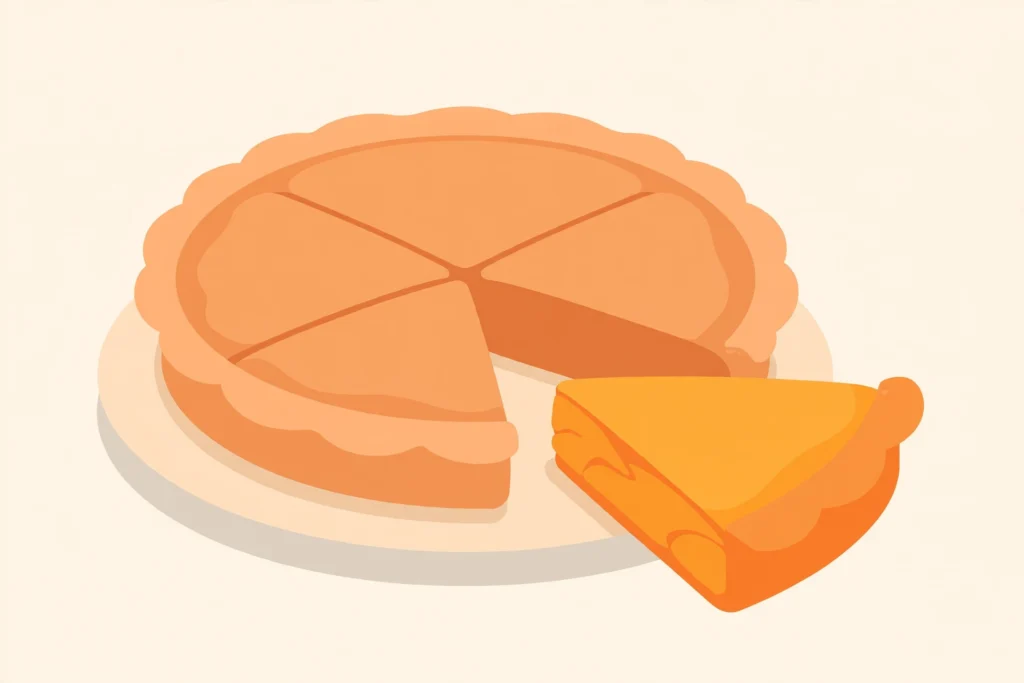
A unit fraction is a fraction with 1 on top, like 1/2 or 1/4. It names exactly one equal piece of a whole.
What Is a Unit Fraction?
Every fraction has two jobs. The bottom number, the denominator, tells how many equal pieces the whole is cut into. The top number, the numerator, tells how many of those pieces we are talking about. In a unit fraction, the top number is always 1, so we are talking about exactly one piece.
Cut a pancake into three equal pieces and one piece is 1/3. Cut it into eight equal pieces and one piece is 1/8. The general form is 1/n, where n is a whole number like 2, 3, 4, or 10. If you can remember “unit means one,” the name almost explains itself: a unit fraction is one unit-sized piece.
Third grade is when unit fractions take center stage. Students learn to name them, draw them, and place them on number lines. They also learn that every fraction can be built from unit fractions stacked together, which turns a confusing symbol like 3/4 into something concrete: three one-fourth pieces joined end to end.
How Do You Spot a Unit Fraction?
Look at the numerator first. If the top number is exactly 1 and the bottom number is a whole number, you are looking at a unit fraction. 1/5 is a unit fraction. 1/12 is a unit fraction. 2/5 is not, because its numerator is 2. Neither is 3/3, even though it looks tidy.
A common mix-up happens with fractions like 4/4 or 1/1. 1/1 has a numerator of 1, so yes, it counts as a unit fraction, even though it equals one whole. It means one piece of a whole cut into one piece, which is just the whole itself. Fractions like 2/4 or 3/6 name more than one piece, so they are not unit fractions.
What Are Some Unit Fraction Examples?
The unit fractions kids meet first are 1/2 and 1/4. Half of a sandwich, one quarter of a pizza, one third of a candy bar split three ways. As the grades move on, 1/3, 1/5, 1/6, 1/8, and 1/10 join the lineup.
Sharing stories make them stick. Four friends share one granola bar fairly, so each friend gets 1/4. Three siblings split one cookie, so each gets 1/3. Six players share a watermelon evenly, and each player gets 1/6. In every story the whole changes but the pattern holds: one whole, cut into equal pieces, one piece per person.
Why Does a Bigger Bottom Number Mean a Smaller Piece?
This is the trickiest idea in the whole article, so read it slowly. Compare 1/2 and 1/8. In 1/2 the whole is cut into 2 pieces. In 1/8 the whole is cut into 8 pieces. Cutting the same-sized whole into more pieces forces each piece to shrink. So 1/8 is much smaller than 1/2, even though 8 is bigger than 2.
Picture two identical pizzas. Cut the first into 2 giant slices and the second into 8 small slices. Which single slice would you rather eat? The half-pizza slice, obviously. That is why ordering unit fractions goes the opposite way from whole numbers: 1/2 is the biggest, then 1/3, then 1/4, then 1/5, getting tinier as the denominator grows.
Teachers love paper strips for this. Fold one strip in half and shade 1/2. Fold a second strip into fourths and shade 1/4. Fold a third into eighths and shade 1/8. Line the shaded pieces up side by side and the shrinking is right there in front of you, no arguing with it.
How Do Unit Fractions Build Bigger Fractions?
Here is where unit fractions earn their keep. Any fraction is just a pile of unit fractions. 3/4 means three 1/4 pieces: 1/4 + 1/4 + 1/4. 5/6 means five 1/6 pieces. Once kids see this, fractions stop being mysterious codes and start being counting games.
Number lines show the same idea with jumps. Start at 0. Hop forward by 1/4. Hop again. Hop a third time. You have taken three jumps of 1/4 and landed on 3/4. Each hop is a unit fraction, and counting the hops tells you the numerator.
This building-block view also explains adding fractions with the same denominator. 1/8 + 1/8 + 1/8 is three one-eighth pieces, which is 3/8. Nothing fancy is happening, just counting same-size pieces, the same way you count apples.
What Is the Difference Between a Unit Fraction and a Proper Fraction?
A proper fraction is any fraction smaller than one whole, like 1/2, 2/3, or 5/8. A unit fraction is the special case where the numerator is 1. So every unit fraction is a proper fraction, except 1/1 which equals one whole. But not every proper fraction is a unit fraction. 2/3 is proper but not a unit fraction, because it names two pieces instead of one.
Did You Know: Thousands of years ago, ancient Egyptians wrote almost every fraction as a sum of unit fractions. They would write 2/3 as 1/2 + 1/6 instead of using a numerator of 2. Mathematicians still call these Egyptian fractions today.
Try It: Build Fractions from Unit Pieces

Cut three long strips of paper, all the same length. Leave the first strip whole. Fold the second strip in half, crease it, open it, and shade one half. Label it 1/2. Fold the third strip in half, then in half again, to make fourths. Shade one fourth and label it 1/4.
Now tape the 1/2 piece and the 1/4 piece onto a notebook page. Under each one, write the addition sentence it shows. Under the half, write 1/2 = 1/2. Under the fourth, try shading two fourths and write 1/4 + 1/4 = 2/4. Keep going: three shaded fourths is 1/4 + 1/4 + 1/4 = 3/4.
Finish by answering this: which shaded piece is bigger, 1/2 or 1/4? Hold your folded strips next to each other. The half piece wins, and you have just proved that a smaller denominator makes a bigger unit fraction.
Quick Practice
Which is larger, 1/3 or 1/5? Explain your thinking.
Both name one equal piece of the same-sized whole. In 1/3 the whole is cut into 3 pieces, and in 1/5 it is cut into 5 pieces. Fewer pieces means bigger pieces, so 1/3 is larger than 1/5.
Related Terms
Frequently Asked Questions
Is 1/1 a unit fraction?
Yes. The numerator is 1, so it fits the definition. 1/1 names one piece of a whole cut into one piece, which is the whole itself, so 1/1 equals 1.
Is 2/4 a unit fraction?
No. Its numerator is 2, so it names two pieces instead of one. It is still a fraction, and it equals 1/2, but it is not a unit fraction.
Can you add unit fractions together?
Yes, and that is one of their best tricks. 1/4 + 1/4 = 2/4, which simplifies to 1/2. Any fraction can be written as a sum of unit fractions, like 3/5 = 1/5 + 1/5 + 1/5.
What grade learns about unit fractions?
Unit fractions appear in third grade math. The Common Core standard 3.NF.A.1 asks students to understand a fraction 1/b as one part of a whole cut into b equal parts, which is the definition of a unit fraction.
Reading about it is one thing, practising it is another. Our free What Is a Fraction? lesson builds the idea step by step, with slides, a printable worksheet and a full answer key.
Members unlock every lesson in the library, including the full Fractions, Multiplication, Place Value, Addition & Subtraction, Time & Money and Geometry & Shapes units. See the full library


