
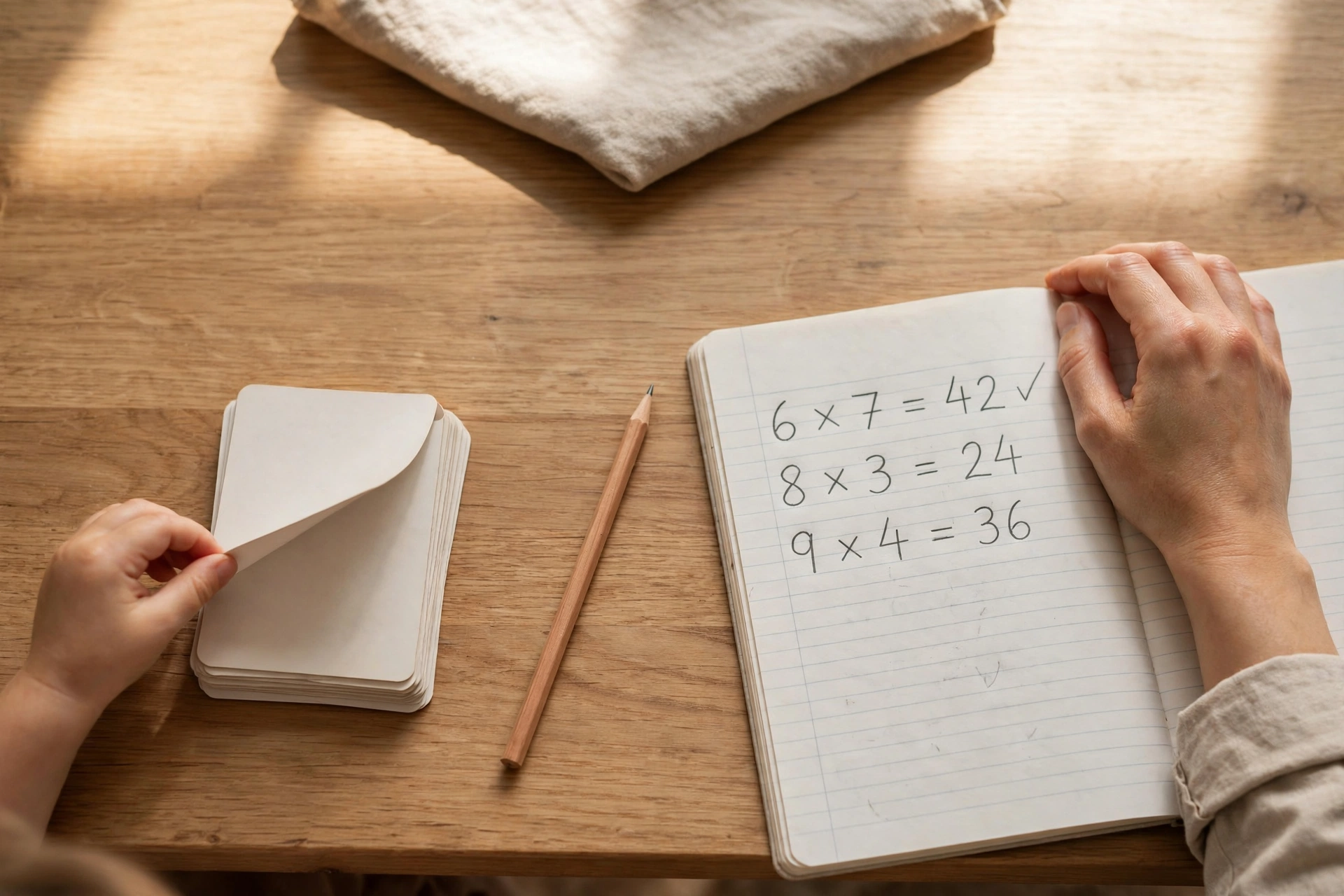
If your child is in Year 4 in England, the multiplication tables check will land in June, and it often sounds bigger than it is. It is a short onscreen check of times tables recall, and the best preparation is not a mountain of worksheets. It is a few calm minutes of practice, most days, in the weeks before. This guide walks through what happens, where to focus, and a simple four week plan that fits real family life.
Many parents search for a year 4 times tables test or an MTC practice test and find pages that promise a lot and explain very little. You do not need to buy anything, or recreate school at home. What helps is knowing the format, knowing which tables carry the most weight, and building recall a little at a time. A fact called out in the car. Three flashcards while the pasta cooks. That is what sticks.
The Check at a Glance
Here is the whole check on one small table. Every detail in it comes from the official guidance for parents and schools.
| Detail | What it means for your family |
|---|---|
| Number of questions | 25 times table questions, with 3 practice questions first |
| Time per question | 6 seconds to type the answer |
| Pause between questions | 3 seconds before the next question appears |
| Tables covered | Multiplication facts from the 2 to 12 times tables |
| Tables asked most often | The 6, 7, 8, 9 and 12 times tables |
| When it happens | A two week window in June, and your school picks the day inside that window |
| How long it takes | About 5 minutes from start to finish |
| Pass mark | There is no pass mark |
| Score | A total score out of 25 |
| Who sees the result | Your school receives it, and your child’s teacher shares the score with you |
Two things usually surprise parents. The first is how short it is, at about five minutes. The second is how fast six seconds feels the first time your child tries it. Both point the same way. Practise the pace gently at home, and the day itself holds no surprises.
How the Multiplication Tables Check Weights the Hard Tables
Not every table gets asked about equally. The Department for Education attainment guidance explains that each check puts an emphasis on the 6, 7, 8, 9 and 12 times tables because these are the most difficult. The easier tables still appear, but the hard five carry more of the questions. That is useful news for a busy family, because it tells you where practice time earns the most.
It also explains a common kitchen table mystery. Your child can rattle off the 2s, 5s and 10s and still feel wobbly about the check as a whole. Those confident tables are the ones asked least. The facts that decide the score are the awkward middle ones, like 7 x 8, 6 x 7 and 8 x 9, plus the long climb of the 12s. If practice time is short, and it usually is, spend it there.
One more detail helps. A fact and its flip do not both appear in the same check, so a child who meets 7 x 8 will not also be asked 8 x 7 in that set. Teaching flips as one fact, so 7 x 8 and 8 x 7 live in the same memory, quietly halves the learning. When your child learns a hard fact, say its partner out loud in the same breath.
Your 4-Week Multiplication Tables Check Practice Plan

Four weeks is plenty when the sessions stay short. Aim for five to ten minutes, four or five days a week, and stop while it still feels easy. Little and often beats long and rare, because recall grows through repetition and sleep. Pick a slot that already exists, like after breakfast, in the car, or while tea is in the oven, and let the new habit ride on an old one.
Week 1: Settle the Easy Tables and Find the Gaps
Start with what your child mostly knows. Mix quick rounds of the 2, 3, 4, 5 and 10 times tables with a gentle look at the 11s. Keep it light and spoken out loud. You call a fact, they answer, you move on. Note any fact that draws a long pause or a wrong answer, on a scrap of paper or in a phone note. That short list is gold. It tells you where weeks two and three should aim, and it usually holds fewer facts than parents fear.
Week 2: The 6s, 7s and 8s
Now spend the week on the 6 and 7 times tables, then bring in the 8s. Learn each new fact with its flip, and lean on facts your child already owns. A child who knows 5 x 7 can build 6 x 7 by adding one more 7. Keep sessions spoken and snappy, with flashcards saved for the two or three facts that refuse to stick. Stick those stubborn cards on the fridge door. Facts seen at breakfast have a way of quietly moving in.
Week 3: The 9s, 12s and the Stubborn Few
Week three belongs to the 9 and 12 times tables, plus the stubborn list from week one. The 9s reward a pattern hunt, since the digits of every answer add up to 9, so let your child spot that for themselves. The 12s feel long, but most children know the early facts, so the real work is a short stretch at the top end. Keep mixing in the 6s, 7s and 8s, so last week’s learning does not fade.
Week 4: Mix Everything and Add the Clock
In the final week, mix all the tables together the way the check does, and add gentle timing. Use a kitchen timer, giving roughly six seconds a fact, and keep your voice cheerful when the time runs out. The aim is familiarity, not pressure. If a fact times out, say the answer together, flip it, and move on. Finish each session with a few facts your child finds easy, so practice always ends on a win.
Printable Practice Tracker
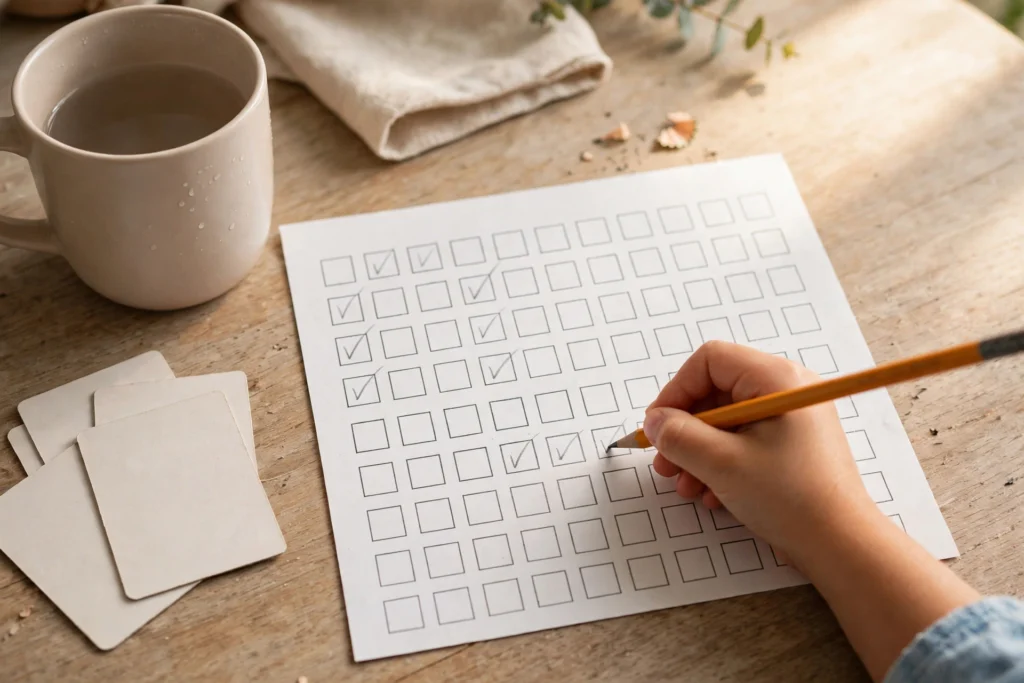
Print this table, or copy it onto paper, and stick it where practice happens. Tick a box each time you finish a short session. The ticks matter more than any score at this stage, because they show your child the habit building. Four or five ticks in a week is a good week. A missed day is just a missed day, so tick the next one and carry on.
| Week | Focus | Mon | Tue | Wed | Thu | Fri | Sat | Sun |
|---|---|---|---|---|---|---|---|---|
| Week 1 | Easy tables and finding gaps | ☐ | ☐ | ☐ | ☐ | ☐ | ☐ | ☐ |
| Week 2 | The 6s, 7s and 8s | ☐ | ☐ | ☐ | ☐ | ☐ | ☐ | ☐ |
| Week 3 | The 9s, 12s and stubborn facts | ☐ | ☐ | ☐ | ☐ | ☐ | ☐ | ☐ |
| Week 4 | Mixed tables with gentle timing | ☐ | ☐ | ☐ | ☐ | ☐ | ☐ | ☐ |
Let your child do the ticking. Handing over the pencil hands over ownership, and children protect habits that feel like theirs.
What to Do in the Week Before the Check
Ease off. The final week is for keeping facts warm, not for learning new ones. A few minutes of mixed practice on two or three days is enough, and keep it to facts your child mostly knows. Brand new facts introduced now have no time to settle, and they crowd out the ones that were nearly there.
Ask the school anything you are unsure about, like which day your child’s group sits the check, or what arrangements are in place if your child has extra needs. Schools let children try out the format in class first, and most come home treating it like a short computer game. If your child talks about it, keep your tone light, the way you would talk about a spelling quiz.
Calm Advice for the Day Itself
The night before, protect sleep and keep the evening normal. No last minute drilling at bedtime. A tired brain recalls slowly, and six seconds is unforgiving of a late night. A normal breakfast, a normal school run, and a hug at the gate will do more than any extra worksheet.
What you say matters more than what you practise. Try something plain, like this. It is a quick check of facts you already know, it lasts about five minutes, and if one question slips past, the next one is a fresh chance. Children borrow calm from the adults around them. If you treat the morning as ordinary, they usually do too.
What the Score Means and What It Does Not Mean
Your child gets a total score out of 25, and there is no pass mark for the check. The Standards and Testing Agency, which runs the check, and the Department for Education parent guide are both clear on that. Schools receive the results, and your child’s teacher will share the score with you. Read it as a snapshot of recall on one June morning, and a pointer to where more support would help.
A score does not measure whether your child is good at maths. It says nothing about problem solving or the bigger ideas waiting in Year 5 and Year 6. A child can score modestly here and still thrive in maths once recall catches up. If the score is lower than you hoped, the useful question is a practical one. Which tables still need work, and what small habit will build them over the summer?
And if the score is high, celebrate briefly and move on. The facts still need an occasional outing, in the car or over a card game, or they fade.
Frequently Asked Questions
How many questions are in the multiplication tables check?
There are 25 questions. Your child answers 3 practice questions first, so the screen and the pace feel familiar before the real questions begin.
How long does my child get for each question?
Your child gets 6 seconds to answer each question. The Standards and Testing Agency guidance also sets a 3 second pause between questions, which gives a small breath before the next fact appears. Copy that pause in week four practice at home.
When does the check take place?
It takes place in a two week window in June. Schools choose when to run it inside that window, so ask your school if you want to know your child’s day. There is no single national test day.
Is there a pass mark my child has to reach?
No. There is no pass mark and no expected standard, so no child passes or fails the check. The score simply shows how fluently your child recalled their tables that day, and it helps the school plan support.
Do we need an MTC practice test at home?
No. You do not need to buy or download a special MTC practice test, and this guide does not depend on one. Short spoken rounds work well, and in the final week a kitchen timer copies the feel of the check closely enough. What matters is the daily habit, not the practice sheet.
Will I be told my child’s score?
Yes. Schools receive a total score out of 25 for each child, and the Department for Education parent guide says your child’s teacher will share that score with you. If it has not arrived by the end of term, ask at the school office.
Reading about it is one thing, practising it is another. Our free What Is Multiplication? lesson builds the idea step by step, with slides, a printable worksheet and a full answer key.
Members unlock every lesson in the library, including the full Fractions, Multiplication, Place Value, Addition & Subtraction, Time & Money and Geometry & Shapes units. See the full library


