
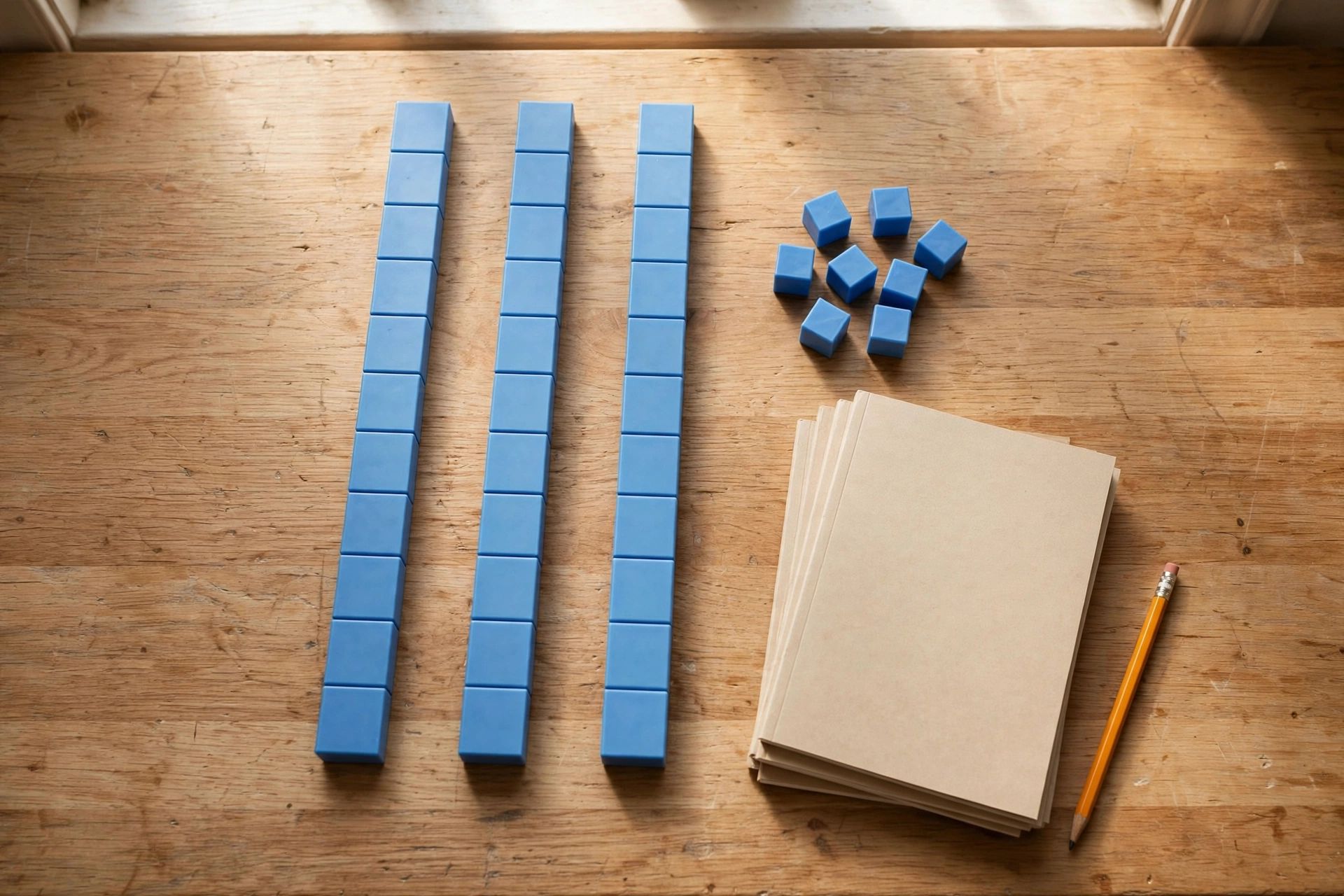
Second grade is the regrouping year, and the best math curriculum for 2nd grade is the one whose teaching style matches how much of the lesson you can personally deliver.
The choice has a clear shape: video-guided blocks (Math-U-See Beta), scripted abacus lessons (RightStart Level C), gentle scripted games built from household items (Math with Confidence), a rigorous workbook pair (Dimensions Math 2), a self-teaching worktext (Math Mammoth), challenge puzzles (Beast Academy), and the free one (The Good and the Beautiful).
Every program below covers the core of the grade 2 list, which is well defined and shorter than most parents fear. This is a fit decision, not a spending contest.
Quick picks: Second grade is the regrouping year: by June, children are typically expected to add and subtract within 1,000 using place value, and to handle money, time to the nearest five minutes, and equal groups, the doorway to multiplication. Most second graders do 20 to 40 minutes of math a day.
Best hands-on pick: RightStart Level C (about $319 in year one with the required Math Set, then about $99 a level). Best video-guided pick: Math-U-See Beta (about $220 for the full set with blocks). Best gentle scripted pick: Math with Confidence Grade 2 (about $50 for the two books).
Best structured workbook pick: Dimensions Math 2 (about $58 for student books, about $103 with home instructor guides). Best budget pick: Math Mammoth Grade 2 (about $43 download) or The Good and the Beautiful Math 2, free as a publisher PDF. Best challenge pick: Beast Academy Level 2 (eight comic-style books, about $120).
And one honest gap in the market: no program teaches grade 2 math entirely by itself on a screen. The well-known app-taught program starts at grade 3.
2nd Grade Math Curricula at a Glance

Read the parent prep column first, because it is the column families actually choose on. Prices below were checked at the publisher stores in October 2026 and will drift, so use them to compare programs against each other rather than as promises.
Lesson times are the publisher’s own figures where a publisher states them, and format descriptions where they do not, because most publishers never print official daily minutes. Placement beats grade labels throughout: several of these programs use levels instead of grades, and every publisher here offers a free placement check or sample lessons.
| Curriculum | First-year cost | Time per lesson | Parent prep | Approach | Best for |
|---|---|---|---|---|---|
| Math-U-See Beta | About $220 full set with blocks | Short video plus workbook pages | Low to moderate: watch the video first, then coach | Mastery, video lessons plus Integer Blocks, all addition and subtraction | Regrouping that has to be seen and built |
| RightStart Level C | About $319 first year (bundle about $99 plus Math Set about $220), about $99 after | 30 to 40 min daily (publisher-stated) | High: fully scripted, you teach every lesson | Hands-on mastery with card games, AL Abacus, gentle spiral review | Deep number sense, hands-on kids |
| Math with Confidence Grade 2 | About $50 for the two books | 20 to 30 min (author-stated) | Moderate time, near-zero prep: scripted word for word, household items | Mastery with daily review, hands-on activities and games | Gentle confidence building, nervous teachers |
| Dimensions Math 2 | About $58 student books, about $103 with home instructor guides | Parent paced, no official minutes | High: teach from the guide | Mastery, concrete pictorial abstract, Singapore method | Rigorous foundation, strong mental math |
| Math Mammoth Grade 2 | About $43 download | No official minutes, child works in the book | Low to moderate: brief intro, then check work | Mastery worktext, teaching written to the student | Budget, low prep, multi-child families |
| Beast Academy Level 2 | About $120 for the eight books, online about $100 a year | Self-paced reading plus problem sets | Low to moderate: read along, discuss hard problems | Mastery with hard puzzles, comic Guide books | Advanced kids who are bored by regular math |
| The Good and the Beautiful Math 2 | Free PDF, printed course set about $59 | Short daily lessons, parent-led | Moderate time, near-zero prep: open-and-go | Spiral with constant review, course book plus manipulative box | Tight budgets, trying before buying |
What Second Grade Math Actually Covers
Whatever program a family buys, this is the whole job of second grade math. Place value grows to 1,000: three-digit numbers read as hundreds, tens and ones, compared with less than and greater than thinking, and skip-counted by 5s, 10s and 100s.
Adding and subtracting runs fluently within 100 and then within 1,000, and regrouping, composing and decomposing tens and hundreds, is the heart of the year.
Children add up to four two-digit numbers, add and subtract 10 or 100 mentally, and solve one and two-step word problems, learning how addition and subtraction undo each other through fact families.
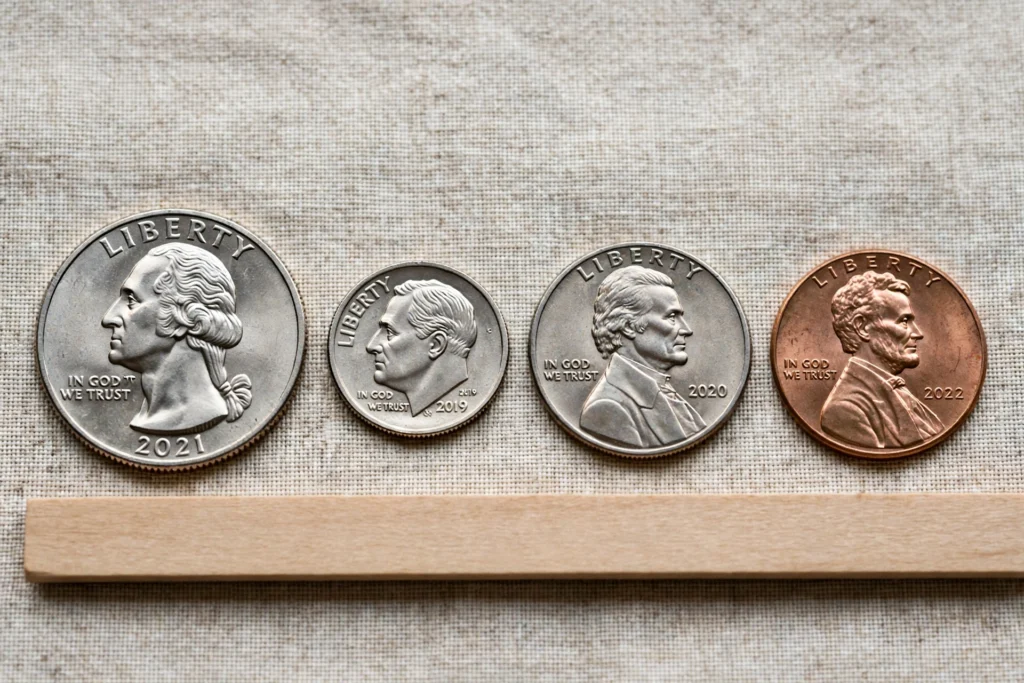
The rest of the year is concrete and checkable: money (dollar bills, quarters, dimes, nickels and pennies, written with the dollar and cent signs), time to the nearest five minutes with a.m.
and p.m., measuring lengths in inches, feet, centimeters and meters, lengths compared and placed on a number line, and picture graphs, bar graphs and line plots. Shapes are described by their attributes, and rectangles and circles are split into halves, thirds and fourths, the on-ramp to fractions.
Odd and even numbers and equal groups in arrays finish the list, and those arrays are what multiplication will be built on next year.
It is a defined list with one mountain in the middle, regrouping, and the right program is the one that gets your child over that mountain in a way they do not dread.
Math-U-See Beta: Best Video-Guided Pick for the Regrouping Year
What it is. The addition and subtraction level of Demme Learning’s mastery program, built around color-coded Integer Blocks and short video lessons. Beta is deliberately single-minded: multiple-digit addition and subtraction, built on place value, until it is fluent.
What grade 2 looks like. Watch the video lesson together, work examples from the instruction manual, then workbook pages with lesson practice, systematic review and application pages, with tests through the level.
The publisher’s Beta scope also weaves in telling and writing time, adding and subtracting US currency, measuring length in inches, feet, centimeters and meters, comparing numbers, perimeter, and data in plots and graphs.
What it costs. The Beta Set runs about $220 as listed on the Demme Learning store at the time of checking, October 2026: Instruction Manual, Student Workbook, Tests booklet, Integer Block Kit, and a one-year Essential Plan subscription card for the online instruction. Families who already own the Integer Block Kit buy the level materials without blocks for less.
Skip if your child already adds and subtracts multiple-digit numbers fluently. Beta is one big topic done deeply, exactly right for shaky regrouping and exactly wrong as a full year for a child who has mastered it. Multiplication is the next level, Gamma, so run Demme’s free placement test before buying.
RightStart Mathematics Level C: Best for Deep Number Sense
What it is.
Fully scripted daily lessons from Activities for Learning, built on the AL Abacus, where children visualize quantities grouped in 5s and 10s, learn facts through math card games rather than drill sheets, and do very few worksheets.
Level C is the level most second graders use, and since levels are not grades, start with the publisher’s free placement check.
What grade 2 looks like. Daily lessons of 30 to 40 minutes, the longest in this roundup. Level C builds on known addition and subtraction facts, works with 4-digit addition and subtraction and 2-digit mental calculations, and introduces multiplication and fractions, alongside area and perimeter, measurement, money, time and geometric designs, with problem solving emphasized throughout.
What it costs. The Level C Book Bundle is about $99 (Lessons, Worksheets and Appendix).
The separate RS2 Math Set of manipulatives, about $220, is required, covers Levels A to F, and is bought once per family, for a first-year total of about $319 and about $99 per level after, as listed on rightstartmath.com at the time of checking, October 2026.
Skip if you cannot teach math personally most days, or the first-year price is a stretch.
The daily teaching commitment and the sticker are both the biggest on this list, and the full Math Set has many pieces to store.
Level C also runs ahead of a standard grade 2 scope in places, so a slower or faster pass through it is normal.
Math with Confidence, Grade 2: Best Gentle Scripted Pick
What it is. Kate Snow’s scripted, open-and-go program from Well-Trained Mind Press, in two books: an Instructor Guide that leads the parent word for word through conversational, hands-on activities and games, and a full-color Student Workbook with two short pages a day. The year runs 32 weeks, with four core lessons and one optional enrichment lesson per week.
What grade 2 looks like. Short lessons of about 20 to 30 minutes: roughly 10 to 15 minutes of teaching, then 10 to 15 minutes of workbook.
The scope covers numbers to 1,000, adding and subtracting two and three-digit numbers, word problems, telling time to the minute, counting money, measuring length, graphs, shapes, and dividing shapes into equal parts.
Materials are household items plus a short list, with base-ten blocks the one purchase the author suggests for families who do not own them.
What it costs. The Instructor Guide and Student Workbook together run about $50 as listed at the Well-Trained Mind Press store at the time of checking, October 2026, which makes this the gentlest-priced fully scripted program here.
Skip if you need a program your child can run alone, or your child is racing ahead. There is no video or app, and grade 2 deliberately skips a formal multiplication unit, so a child who is already multiplying needs enrichment from elsewhere.
Dimensions Math 2: Best for a Rigorous Foundation
What it is. Singapore Math Inc’s flagship series for US families: a full-color textbook and workbook pair per semester, following the concrete, pictorial, abstract progression the Singapore method is known for, with a linked workbook exercise after every textbook lesson and a strong emphasis on mental math strategies and word problems.
What grade 2 looks like. The parent teaches a short textbook exploration with discussion and hands-on or pictorial work, then the child completes the workbook exercise, at mastery pacing with chapter reviews.
The 2A books cover numbers to 1,000, addition and subtraction, length, weight, and multiplication and division of 2, 5 and 10, and 2B completes the standard year with money, time, fractions, graphs and geometry.
What it costs. Textbooks 2A and 2B and Workbooks 2A and 2B are $14.50 each as listed on singaporemath.com at the time of checking, October 2026, about $58 for the full year of student books.
Home Instructor’s Guides are $22.50 each, so the set most homeschool families actually buy totals about $103. The publisher’s own Grade 2 Set with the guides, tests and printouts is $169.
Skip if you are a first-time homeschool parent who wants hand-holding. The multi-book setup confuses first-time buyers and the guides assume a confident teacher. Placement matters too: Singapore levels often sit ahead of US grade levels, so use the publisher’s free placement test.
Math Mammoth Grade 2: Best Budget, Low-Prep Pick
What it is. Maria Miller’s worktext curriculum, where the teaching explanations and the exercises live in the same book, written directly to the student in short steps with worked examples. Mastery approach, with mixed review lessons and cumulative reviews built in.
What grade 2 looks like. The child works through worktexts 2-A and 2-B at the family’s pace, reading the teaching boxes and completing the exercises, with a chapter test per chapter and an end-of-year test.
The year covers the base-ten system within 1,000, fluency with addition and subtraction within 100 including regrouping both ways, standard units of measure, shapes, time, money, an introduction to multiplication, and bar and picture graphs.
Hundreds of free videos by the author are matched to the lessons for families who want a topic explained on screen.
What it costs. The complete Grade 2 download is $42.50 as listed on mathmammoth.com at the time of checking, October 2026: both worktexts, answer keys, tests and cumulative reviews, plus a worksheet maker. Printed copies cost more through the publisher’s print partners.
Skip if your child needs manipulatives built into the lesson. None are included, so keep counters and base-ten blocks on the table yourself for the regrouping chapters. The pages are plain, and the download only saves money if your printing is cheap.
Beast Academy Level 2: Best for Kids Racing Ahead
What it is. Art of Problem Solving’s elementary program, split into Guide books that teach through comic-style chapters where monster characters argue their way to the math, and Practice books with over 400 problems per unit, from warm-ups to genuinely hard puzzles.
What grade 2 looks like. Self-paced reading plus problem sets. Book 2A covers place value, comparing and addition. Book 2B covers subtraction, expressions and problem solving. Book 2C covers measurement, strategies for addition and subtraction, and odds and evens.
Book 2D covers big numbers, algorithms and problem solving. It teaches the core grade 2 arithmetic deeply and then keeps going on purpose.
What it costs. The eight books (Guide and Practice 2A to 2D) run about $120 for the full set, Beast Academy Online is $99.99 a year covering all levels, and a books-plus-online bundle runs about $160 a year, at publisher list prices as listed at the time of checking, October 2026.
Skip if your child is struggling or needs lots of routine practice. Beast Academy is built for advanced learners and is deliberately hard, with repetition light by design.
One coverage note: money and telling time are not chapters in Level 2, so a family that needs those covered this year should plan to teach them in daily life or pick a different main program.
The Good and the Beautiful Math 2: Best Free-to-Start Pick
What it is. An open-and-go course where one Course Book serves as both teacher guide and student book, leading short parent-led daily lessons that mix teaching, workbook pages, games and hands-on activities with the pieces in the level’s own Math Box. The publisher describes the program as mainly spiral, constantly reviewing earlier concepts.
What grade 2 looks like. Open the book and teach. The publisher describes Math 2 as covering advanced addition and subtraction, multiplication, beginning geometry, graphing, time, measurement and more.
Each child needs their own consumable Course Book, and the Math 2 Box is specific to this level and required to complete the course, though the publisher provides templates for making your own box pieces.
What it costs. The complete Math 2 Course Book PDF is free from the publisher’s own downloads page. Printed, the Math 2 Course Set (Course Book plus Math 2 Box) is $58.98 as listed on goodandbeautiful.com at the time of checking, October 2026. A separate printed Answer Key is also sold.
Skip if you need a strictly secular program. The Good and the Beautiful is a faith-based publisher, and values content runs through the brand, though the math courses are lighter-touch than its language arts. Also, printing a full-color course book at home can quietly cost more than the printed set, and the Math Box pieces are used constantly.
How to Choose: Start Here If

Start here if you are brand new to homeschooling in second grade: Math with Confidence Grade 2 or The Good and the Beautiful Math 2. Both are scripted or open-and-go, both forgive a nervous teacher, and one of them is free to try as a PDF.
Start here if regrouping is the wall your child keeps hitting: Math-U-See Beta. The blocks make carrying and borrowing visible, the video does the explaining, and the whole level is the one skill done properly. RightStart Level C is the alternative if you can teach daily and want the deepest number sense in the field.
Start here if your child is racing ahead: Beast Academy Level 2, the only program here designed to challenge a strong seven or eight-year-old, with expressions, algorithms and genuinely hard problems instead of faster easy pages.
Start here if budget comes first: Math Mammoth Grade 2 at $42.50 for the whole year, or TGATB Math 2 free as a PDF plus the Math Box. Both are complete programs, not samples.
Start here if you have very little teaching time: Math Mammoth, where the book teaches and you check, or Math-U-See, where the video teaches and you coach. Be honest with yourself here: RightStart and Dimensions both need you teaching most days, and at grade 2 there is no fully self-teaching app program yet.
Use free samples before buying: every publisher on this list offers sample lessons, placement tests or a free download. Run one real lesson at your own table, ideally a regrouping lesson, before spending money.
Frequently Asked Questions
What math should a 2nd grader learn?
Place value to 1,000, adding and subtracting within 100 fluently and within 1,000 with regrouping strategies, one and two-step word problems, money, telling time to the nearest five minutes, measuring lengths, reading graphs, and equal groups and arrays as the foundation for multiplication. That is the standard grade 2 list, and every program in this roundup covers its core.
How long should 2nd grade math take each day?
About 20 to 40 minutes for most children. RightStart plans the longest lessons here at 30 to 40 minutes, Math with Confidence runs about 20 to 30, and the workbook programs spread the year across a full school year of lessons, so short and daily beats long and rare.
Does my 2nd grader still need manipulatives?
For regrouping, yes, more than at almost any other point in elementary math. Carrying and borrowing are place value made physical, which is why Math-U-See is built around its blocks, RightStart around its abacus, and TGATB ships a Math Box, and why workbook-first programs like Math Mammoth expect you to keep base-ten blocks on the table yourself.
Which curriculum is best for a 2nd grader who is behind in math?
The one that lets you start where your child actually is.
Math-U-See’s mastery levels make it painless to drop back to Alpha to rebuild single-digit addition and subtraction before Beta’s regrouping, and RightStart’s free placement check does the same job for its levels.
Avoid any program that forces a child with gaps to start at a grade label and keep up.
Can we switch math curricula mid-year in 2nd grade?
Yes, and the regrouping unit is when most families do it. Run the new program’s free placement check or sample lessons first, start where your child places, and do not make them repeat months of mastered work just to begin at lesson 1.
The free TGATB download and the samples on this list make a mid-year switch cheap to test, and our free worksheet generator can keep fact practice going in the gap week.
Is there a math program that teaches itself at grade 2?
Not fully, and any list that claims otherwise is selling something. The best-known app-taught program, Teaching Textbooks, starts at Math 3, so it does not exist for second graders yet.
At grade 2 the lowest parent-load options are Math Mammoth, whose worktext is written to the student, and Math-U-See, whose video lessons carry the teaching while you coach. Everything else on this list asks a parent to teach, scripted or not.
Second grade is one defined list with one mountain in the middle, and every program here climbs it a different way. The cheapest honest test is one real sample lesson at your own table before any money moves.
Our free math tools page can support whichever program you choose, with printable practice for the regrouping weeks and the fact practice that runs all year alongside.
Every topic clicks faster with practice. Our Resource Library has free lesson packs with slides, printable worksheets and full answer keys, ready to download and teach.
Members unlock every lesson in the library, including the full Fractions, Multiplication, Place Value, Addition & Subtraction, Time & Money and Geometry & Shapes units. See the full library


