


Ask a room of fourth graders who is good at math and watch what happens. A few hands shoot up. Most stay down, and some students glance away as if the question were not meant for them. Those lowered hands are not about ability.
They are about identity: the story each child tells about whether math is for someone like them. The good news is that stories can be rewritten, and your classroom is the editing room — where students build a positive math identity.
What Is Math Identity?
Math identity is a student’s answer to the question “Am I a math person?” It blends belief, belonging, and past experience. A child with a positive math identity expects to make sense of numbers, feels entitled to a seat at the math table, and treats a wrong answer as information rather than a verdict.
Identity forms early and quietly. By third grade, many students have already sorted themselves into “math people” and everyone else, often based on speed, grades, or offhand comments. Because it forms through daily classroom moments, it can also be reshaped through daily classroom moments. That is where you come in: every daily moment is a chance to build a positive math identity.
Why Does a Positive Math Identity Matter So Much?
Identity drives behavior. A student who believes math ability is fixed will dodge hard problems, hide mistakes, and quit early. A student who believes ability grows with effort will attempt, err, and adjust. Same problem, same brain, different outcome, all because of the story underneath.
It also fights back against harmful myths. Far too many students believe you are either born with math ability or not, and some still hear that boys are naturally better at math. Research shows neither claim holds up. Every student can succeed in math with the right support, and classrooms that say so out loud help every student build a positive math identity.
How Do Mistakes Shape Math Identity?
Mistakes are identity crossroads. In a classroom where errors bring groans, students learn to hide their thinking. In a classroom where errors bring curiosity, students learn that thinking is the job. The same wrong answer builds shame in one room and insight in another.
Make mistakes public and useful. When a student shares a wrong answer, thank them and dig into the logic: “Show us how you got there.” The class often finds a smart partial idea inside the error. Students who watch mistakes get celebrated start volunteering their own half-formed thoughts, which is exactly how learning accelerates. Over time, this routine turns mistakes into fuel for a positive math identity.
What Language Builds a Positive Math Identity — or Breaks It?
Small phrases carry big weight. “You are so smart” ties worth to being right, so students avoid risks that might prove otherwise. “Your strategy was clever” ties worth to thinking, so students take more risks. Praise the process out loud and the product will follow.
Quick Answer: Never tell students you were bad at math. It sounds honest, but children hear permission to give up. If your own math story is rocky, frame it as unfinished: “Math did not click for me at your age, and I am still learning better ways to teach it.” That models growth instead of surrender.
Position every student as a thinker. Ask students to share strategies, not just answers. When you revoice a quiet student’s idea for the class, you announce that the idea mattered. Being heard as a mathematician, even once a week, rewires what a child believes about themselves.
How Do You Reach the “I Am Bad at Math” Student?
Start by listening. A short private chat or a simple survey can reveal where the story started: a timed test in second grade, a laughing classmate, a worksheet covered in red marks. You cannot rewrite a story you have not read.
Then engineer small wins. Give the student a problem with multiple entry points so success is nearly certain, and name the win specifically: “You found a pattern nobody else saw.” Stack enough of those moments and the old story starts to crack. A positive math identity is built on evidence, and you control the evidence supply.
How Does Math Identity Form in the First Place?
Math identity is not born. It is built, one experience at a time, starting shockingly early. Research shows that by second grade, many children have already decided whether they are “math people.” The decision rarely comes from test scores. It comes from moments: the time they shared a strategy and the class used it, or the time they gave a wrong answer and felt the room go quiet. Children are constantly collecting evidence about who they are, and math class provides it daily.
The building blocks are small and specific. Being asked “How did you think about that?” signals that your thinking matters. Watching a teacher puzzle through a mistake out loud signals that struggle is normal. Hearing “Mathematicians disagree and discuss” signals that math is a human activity, not a performance. Each of these moments deposits a little into the identity account. Over years, the balance becomes a self-image.
The dangerous part is how invisible the process is. No teacher sets out to damage math identity. It happens in the unexamined defaults: calling only on fast students, praising speed, displaying only perfect papers, saying “This is easy” when a child is struggling. Every one of these sends a message about who belongs. The good news is that the repair uses the same mechanism: small, daily, deliberate messages that say you belong here.
What Do You Say to the Student Who Has Already Given Up?
Do not start with math. Start with the story. In a private moment, ask, “When did math start feeling hard?” Then listen. You will hear about a specific teacher, a timed test, a moment of public embarrassment. That story is the lock. Until you understand it, no strategy will turn the key. Acknowledge what happened: “That sounds really discouraging. No wonder you feel this way.”
Then offer a new story, one small chapter at a time. Give them a problem you know they can solve, and when they do, name exactly what they did well: “You stuck with that when it got tricky. That is what mathematicians do.” The praise must be specific and true, because these students have excellent fake-praise detectors. One genuine moment of competence, clearly labeled, is worth more than a month of generic encouragement.
Recruit them as helpers. The student who believes they are bad at math will not accept “you are good at this,” but they might accept “Can you help me? I need someone to check if these two strategies give the same answer.” Helping positions them as capable without triggering the identity defense. Over weeks, the evidence accumulates: I helped, I explained, I noticed. The old story starts to crack, and a new one grows through the gaps.
Try It: The Math Story Interview
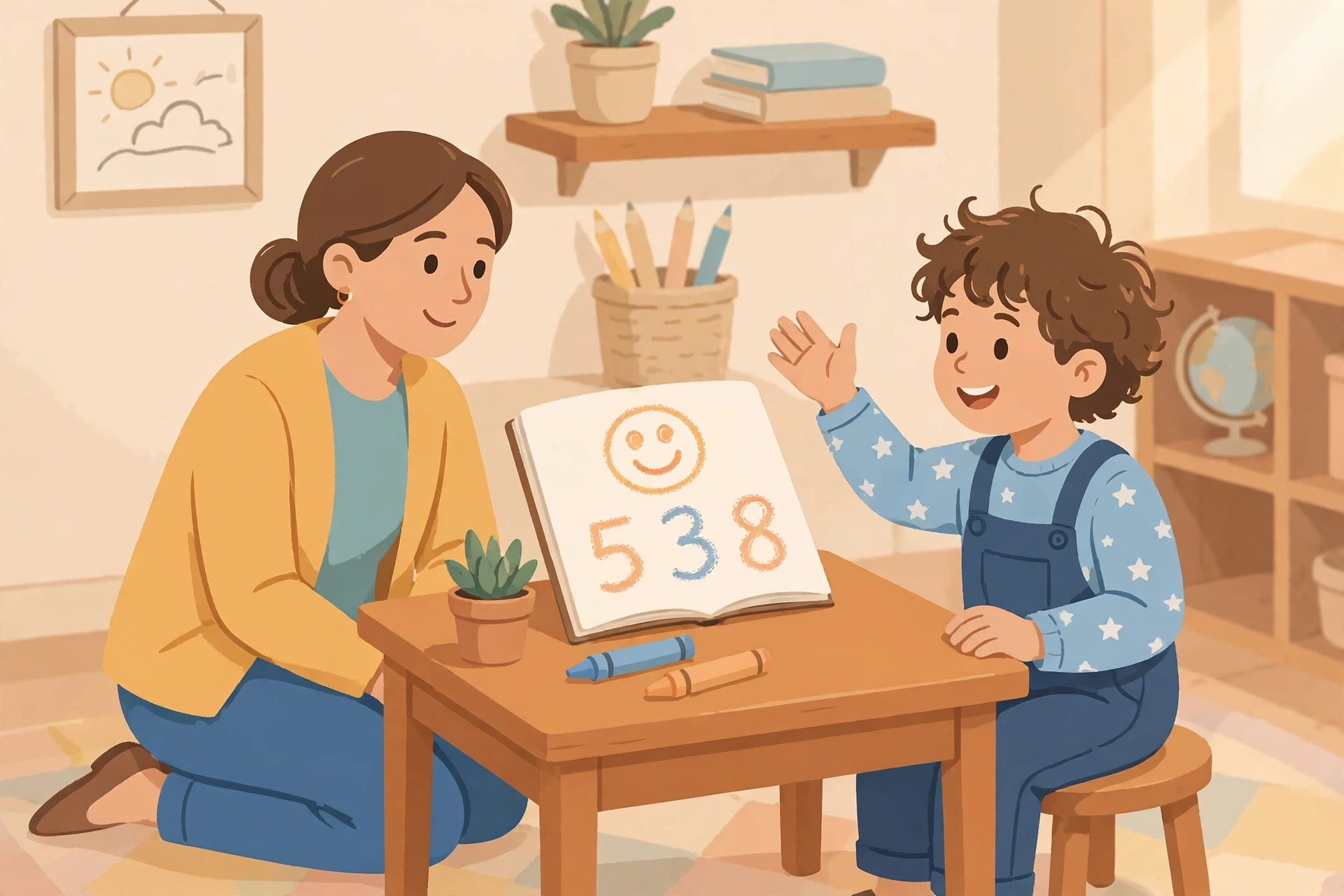
Once a quarter, sit with three or four students for five minutes each and ask three questions: What is your earliest math memory? When do you feel most confident in math? What part of math time makes you uncomfortable? Take notes without correcting anything.
Use what you learn. If a student shines during games but freezes on quizzes, offer the quiz as a partner game first. If another lights up when drawing, add sketching to their problem-solving toolkit. Share your own math story too, framed with growth. When students see that identities evolve, theirs can as well.
Quick Practice
Question: During a lesson, Maya whispers, “I am just bad at math.” Give a response that protects her identity and keeps her working.
Answer: Try: “You are not bad at math. This problem is tricky, and tricky is where learning lives. Show me the part that makes sense so far.” Then stay beside her for the next step. You rejected the label, normalized struggle, and pointed at thinking, not talent.
Related Terms
- Justify – to explain why an answer makes sense using reasons and evidence.
- Word Problem – a math problem told as a short story from real life.
- Number Line – a line marked with numbers in order, used to model counting and operations.
Frequently Asked Questions
Can one teacher change a student’s math identity?
Yes. Identity is built from repeated daily signals, and a teacher controls hundreds of them per week. Consistent messages about growth, mistakes, and belonging add up fast.
What is the difference between math identity and growth mindset?
Growth mindset is the belief that ability can grow. Math identity is broader: it includes belonging, past experience, and whether a student sees math as “for people like me.” Mindset feeds identity, but identity also needs community.
Should I stop praising correct answers?
No, but balance it. Celebrate correct answers and celebrate smart strategies, brave attempts, and good questions just as loudly. Students copy what gets applauded.
How do I handle parents who say they were bad at math?
Gently reframe it as a partnership: “Math teaching has changed a lot, and we would love your help.” Send home activities that invite exploration rather than answer-checking, so families build new stories together.
Does math identity affect test scores?
Indirectly but powerfully. Students with positive math identities attempt more problems, persist longer, and engage more deeply, and that engagement is what lifts scores over time.
Can a parent’s math anxiety affect their child?
Yes, research confirms it does, but the mechanism is reassuring. It is not the anxiety itself that transfers. It is the behaviors: avoiding math homework, expressing dread, framing math as a talent. Parents who say “I was never good at math either, but let’s figure this out together” break the cycle completely. Attitude is contagious, but so is curiosity.
How long does it take to rebuild a damaged math identity?
Months, not days, but the first shifts appear quickly. A student who experiences two weeks of genuine success and specific praise will start participating more. Full rebuilding takes a school year of consistent messages. Think of it like physical therapy: slow, sometimes frustrating, but the function genuinely returns.
Should I stop praising students for being smart?
Praise the process, not the person. “You are so smart” teaches students to protect their smart label by avoiding challenges. “You found a clever way to break that apart” teaches them that effort and strategy create success. The first builds fragility. The second builds identity.
Every topic clicks faster with practice. Our Resource Library has free lesson packs with slides, printable worksheets and full answer keys, ready to download and teach.
Members unlock every lesson in the library, including the full Fractions, Multiplication, Place Value, Addition & Subtraction, Time & Money and Geometry & Shapes units. See the full library


