

Picture two classrooms. In the first, every third grader gets the same worksheet on the same day, and the teacher hopes the middle of the pack keeps up.
In the second, students tackle the same big idea at different entry points, with different supports, and the teacher knows exactly who needs what. The second room looks harder to run. Research suggests differentiation in math is worth the effort.
What Does Differentiation in Math Actually Mean?
Carol Tomlinson, the researcher most associated with the idea, describes differentiation in math as adjusting three things: content (what students learn), process (how they make sense of it), and product (how they show what they know). The adjustments respond to three student traits: readiness, interest, and learning profile.
Here is what it is not. It is not thirty different lesson plans. It is not permanent ability groups with cute names. And it is not giving struggling students easier work while advanced students get the interesting problems. Real differentiation in math keeps the grade-level goal fixed and varies the path students take to reach it.
What Does the Research Say About Differentiation in Math?
A 2024 systematic review and meta-analysis of 49 studies found a large, statistically significant positive effect of differentiation in math on student learning. Across subjects and ages, students in differentiated classrooms learned more than peers in one-size-fits-all rooms.
Math-specific studies point the same way. One experiment with fifth graders adjusted the difficulty of the material, the level of support during group work, and the nature of the final tasks. Math outcomes rose significantly.
In another study, 86 percent of third graders reached proficient or above after their teachers began differentiating math lessons. The pattern is consistent: intentional differentiation in math lifts achievement.
Which Differentiation in Math Moves Have the Strongest Evidence?
Flexible grouping tops the list. Students work in small groups that change with the skill being taught, so a child might be in one group for fractions and another for geometry. Temporary groups avoid the stigma of permanent tracks while letting the teacher target instruction precisely.
Tiered tasks come next. Everyone works toward the same standard, but the task offers entry points at different levels of readiness. A fractions lesson might ask all students to compare fractions, while some use visual models, some use number lines, and some reason about common denominators. Same summit, different trails. That is differentiation in math at its best.
Finally, formative assessment fuels the whole system. Quick exit tickets, whiteboard checks, and observations tell the teacher who needs which group tomorrow. Without that daily data, differentiation in math is just guessing.
What Are the Biggest Pitfalls?
The most damaging pitfall is lowering the thinking. When struggling students only get simplified, low-demand work, the gap widens instead of closing. Recent research emphasizes keeping cognitive demand high for all learners while adding structured support, not stripping the challenge away.
Common Mistake: Sorting students into fixed high, middle, and low groups for the whole year. Permanent groups brand children and lock them out of rich tasks. Groups should form and dissolve around specific skills, sometimes lasting a single lesson. A student can need support with division and still lead the class in geometry.
Two more traps deserve mention. Planning thirty separate activities burns teachers out, so differentiation fails when it is not sustainable. And tailoring lessons to supposed learning styles has weak evidence behind it. Vary the format because the math benefits, not because a label says a child is a visual learner.
How Do You Start Differentiation in Math Without Burning Out?
Think of differentiation in math as a dimmer switch, not an on-off button. Start with one routine. Tier a single task per week. Or begin flexible grouping for just one unit. Small, steady changes beat an ambitious overhaul that collapses by October.
Lean on your team. When grade-level colleagues share tiered tasks and group plans, the workload shrinks and the quality rises. Beginning teachers in particular implement differentiation more successfully with a supportive community around them. You do not have to invent every variation alone.
What Does Differentiation Look Like on an Ordinary Wednesday?
Mrs. Chen’s fourth graders are all working on multi-digit multiplication, but no two tables look the same. One group uses base-ten blocks to build 23 times 4, physically arranging the pieces. Another sketches area models on whiteboards, drawing the rectangles and labeling the parts. A third works on the standard algorithm with larger numbers, while a fourth tackles a challenge: “Find three different ways to solve 23 times 4 and prove they give the same answer.” Same standard, same lesson, four entry points.
The key is that Mrs. Chen planned one rich task and tiered it, instead of planning four separate lessons. She started with the core problem, then asked: “What scaffolding would make this accessible? What extension would make it sing?” The base-ten group is not doing easier math. They are doing the same math with concrete support. The challenge group is not doing extra work. They are doing deeper work with the same numbers.
At the end, everyone gathers. A student from the blocks group explains what they built, and a student from the algorithm group shows how their numbers match the blocks. The class sees that all paths led to the same truth. That closing discussion is where differentiation pays its biggest dividend: students learn that different approaches are not different levels of worth.
How Do You Differentiate Without Drowning in Prep?
Stop creating multiple worksheets. Instead, learn three high-leverage moves that take almost no extra planning. First, offer choice in how students show their work: draw it, build it, or write it. One problem, three doors. Second, use open questions with a low floor and high ceiling: “Find as many ways as you can to make 36” works for every student in the room. Third, tier by support rather than by task: same problem, but one group gets manipulatives, one gets a partially worked example, and one gets an extension question.
Batch your prep. Spend twenty minutes on Sunday tiering the week’s three most important tasks, and let the rest run whole-group. You do not need to differentiate everything. Differentiate the lessons where the concept is newest and the gap between students is widest. Three well-differentiated lessons beat fifteen half-hearted ones.
Recruit the students. Teach them to self-select their level: “Choose the version that will stretch you without snapping you.” Most students choose honestly when the culture is safe. And let them move between levels freely. A student who needed blocks on Monday may be ready for the challenge by Thursday. Fixed groups create fixed mindsets. Fluid groups create growth.
Try It: Tier One Task Three Ways
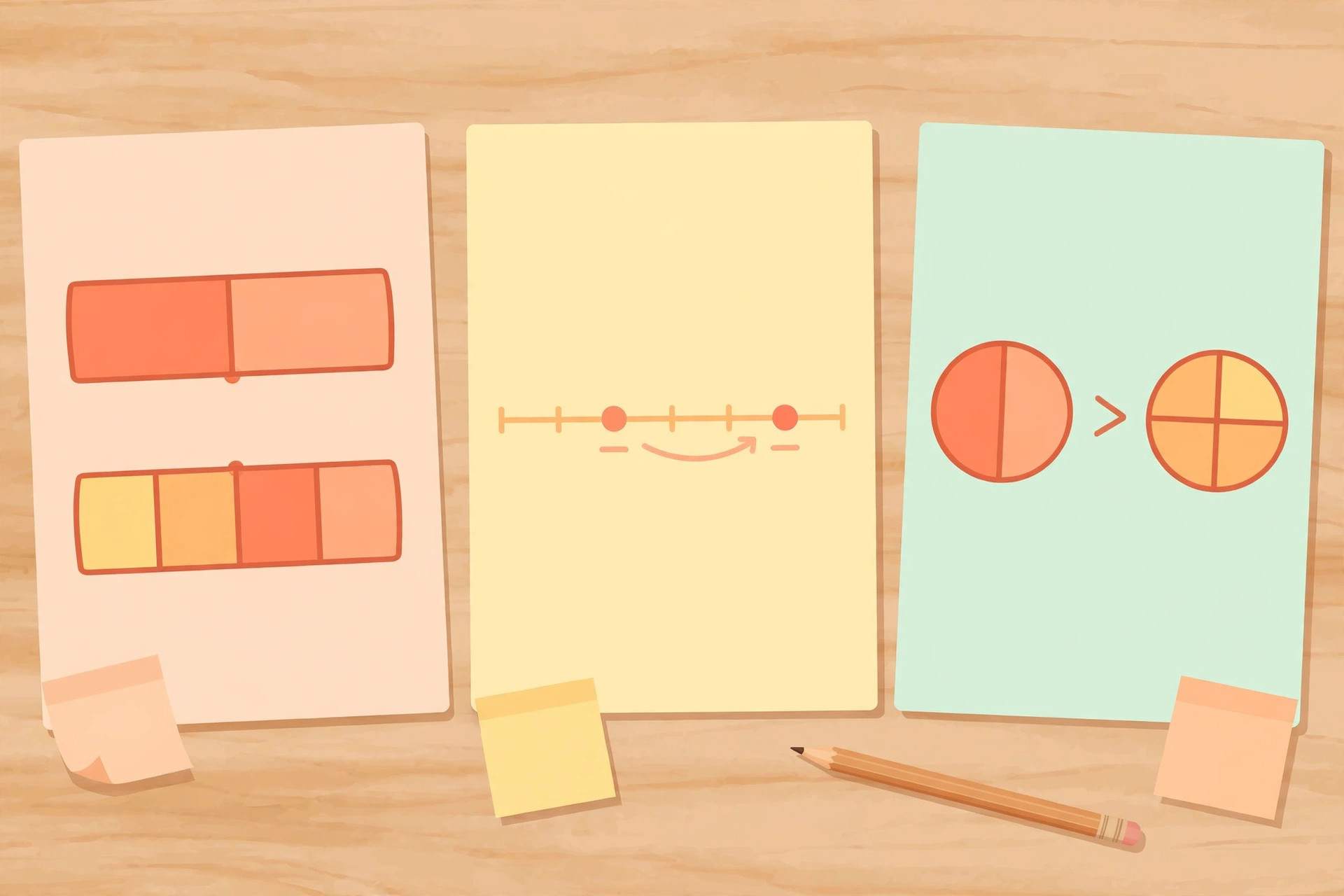
Take one task you already plan to teach next week, such as comparing fractions with different denominators. Design three versions. Version A uses fraction bars and asks students to shade and compare. Version B uses number lines and asks students to place and order. Version C asks students to compare without models and justify with reasoning about denominators.
Give a two-minute pre-check the day before: one comparison problem on a whiteboard. Sort students into versions based on what you see, and tell them groups will change next time. After the lesson, compare the exit tickets. You will likely find that every group tackled grade-level thinking, just through different doors.
Quick Practice
Question: Your class is starting multi-digit multiplication. Name one way to differentiate content, one way to differentiate process, and one way to differentiate product for this topic.
Answer: Content: some students multiply two-digit by one-digit numbers while others tackle two-digit by two-digit. Process: some build with base-ten blocks, others sketch area models. Product: students show mastery by solving a set, teaching a partner, or writing a worked example with explanations.
Related Terms
- Number Line – a line marked with numbers in order, used to model operations and compare values.
- Tape Diagram – a bar model that shows the parts and whole of a problem visually.
- Place Value – the value of a digit based on its position in a number.
- Decompose – to break a number into smaller parts, like splitting 8 into 5 and 3.
Frequently Asked Questions
Does differentiation mean a different lesson for every student?
No. That version is unsustainable and unnecessary. Effective differentiation usually means two or three variations of one strong task, plus flexible grouping that shifts with the skill.
Is ability grouping the same as differentiation?
Not quite. Fixed ability groups are one narrow tool, and research favors flexible, temporary groups instead. Differentiation is the broader practice of adjusting content, process, and product to student readiness.
How much planning time does differentiation take?
More at first, less over time. Teachers report that sharing tiered tasks with colleagues and building a bank of variations cuts planning sharply after the first few months.
Should advanced students just get harder worksheets?
Harder is not the same as deeper. Advanced learners benefit more from rich tasks with multiple solution paths and chances to justify reasoning than from extra pages of the same procedure.
Can differentiation work in a class of thirty students?
Yes, and large classes may need it most. Station rotations, tiered tasks, and peer teaching let one teacher reach many readiness levels within a single period.
Does differentiation lower expectations for struggling students?
Only if done badly. Good differentiation keeps the grade-level standard fixed and varies the support, not the goal. The blocks group is still learning multi-digit multiplication, the actual fourth-grade standard. Lowering the standard is not differentiation. It is tracking, and the research is clear that it harms students.
How do I manage behavior when groups do different things?
Teach the routines before the content. Spend the first two weeks practicing how to get materials, how to ask for help, and what to do when finished. A differentiated classroom runs on procedures. Invest in them early and the rest of the year feels calm.
What does the research say about ability grouping?
Within-class flexible grouping, where students move between groups based on the topic, shows positive effects. Fixed tracking, where students are locked into high, middle, or low tracks all year, shows negative effects for everyone except the top group. The difference is fluidity: group by need, regroup often, never label.
Every topic clicks faster with practice. Our Resource Library has free lesson packs with slides, printable worksheets and full answer keys, ready to download and teach.
Members unlock every lesson in the library, including the full Fractions, Multiplication, Place Value, Addition & Subtraction, Time & Money and Geometry & Shapes units. See the full library


