
The best math curriculum for 1st grade depends less on the brand than on the fit: how your child learns, and how much of each lesson you can personally teach.
For most homeschool families the real choice is between four styles, hands-on manipulatives, video-guided blocks, a structured workbook, and a self-teaching worktext, plus one strong challenge program and one that is free. First grade math is a small, well-defined subject, as the coverage section below shows, so this is a fit decision, not a spending contest.
We checked every price in this guide at the publisher’s own store in October 2026.
Quick answer: Most first graders need only 20 to 30 minutes of math a day. Best hands-on pick: RightStart Level B, about $319 in year one with the required Math Set, then about $99 a level. Best video-guided pick: Math-U-See Alpha, about $220 for the full set with blocks.
Best structured workbook: Dimensions Math 1, about $58 for student books and about $123 with teacher guides. Best budget pick: Math Mammoth Grade 1, a $42.50 download, or The Good and the Beautiful Math 1, free as a publisher PDF.
Best challenge pick: Beast Academy Level 1, about $110 for four comic-style books. And placement beats grade level: most of these programs use levels, not grades, and every publisher here offers a free placement check or samples.
What First Grade Math Actually Covers
Whatever program you buy, the job of first grade math is the same short list. Children add and subtract within 20, moving from counting strategies toward known facts, and they learn the link between addition and subtraction that teachers call a fact family.
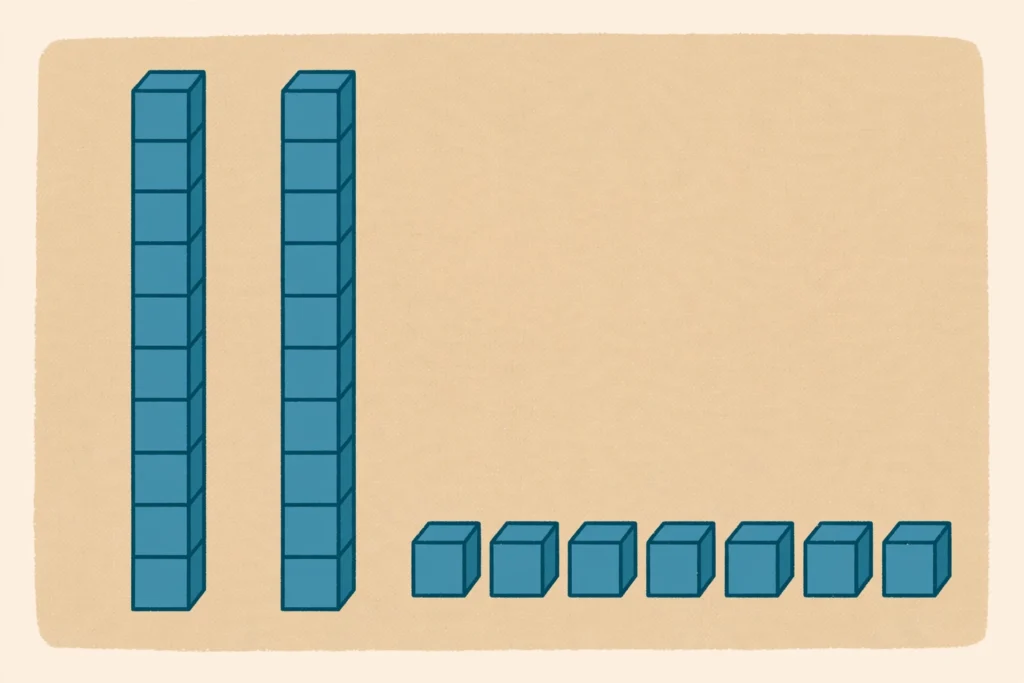
They count to 120, read and write each number, and count on from any starting point. They build place value with tens and ones, compare two-digit numbers as greater than or less than, and add tens in their heads.
They measure and order objects by length, tell time to the hour and half hour, read simple graphs, and split shapes into halves and quarters.
That is one focused year of work, not a race. A program does not need to promise multiplication drills or hundred-question worksheets to be complete, and a program that covers this list well, at a pace your child enjoys, beats a famous name that fights your family every morning.
1st Grade Math Curricula at a Glance
Prices below were checked at the publishers’ own stores in October 2026. Lesson times are the publisher’s own figures where a publisher states them. Parent load is the column most roundups hide, so read it honestly: a wonderful program you cannot teach on a busy Tuesday will lose to a good program you actually open.
| Program | Year price | Format | Lesson time | Parent load | Best for |
|---|---|---|---|---|---|
| RightStart Level B | About $319 first year (bundle + Math Set), about $99 after | Scripted lessons, AL Abacus, card games | 30 to 40 min daily | High: teaches every lesson | Deep number sense, hands-on kids |
| Math-U-See Alpha | About $220 full set with blocks | Video lessons + Integer Blocks + workbook, mastery | Short video plus workbook pages | Moderate: coaches after the video | Video-guided, block-based learning |
| Dimensions Math 1 | About $58 student books, about $123 with teacher guides | Full-color textbook + workbook, mastery | Parent paced, no official minutes | High: teaches from the guide | Rigorous Singapore approach at home |
| Math Mammoth Grade 1 | $42.50 download | Self-teaching worktext, mastery | No official minutes, child works in the book | Low to moderate: brief intro, then checks work | Budget, low prep, multi-child families |
| Beast Academy Level 1 | About $110 for the four books, online about $100 a year | Comic Guide + Practice books, mastery with hard puzzles | Self-paced reading plus problem sets | Low to moderate: reads along, discusses problems | Advanced kids bored by regular math |
| The Good and the Beautiful Math 1 | Free PDF, about $59 printed (book + required Math Box) | Open-and-go course book with games and manipulative box | Short daily lessons, 120 lessons | Moderate: leads lessons, near-zero prep | Tight budgets, gentle beautiful pages |
| Horizons Math 1 | About $120 box set | Spiral workbooks + detailed teacher guide | Daily lesson, 160 lessons | Moderate to high: teaches from the guide | Fast-paced workbook learners |
RightStart Level B: Best for Deep Number Sense
What it is: A fully scripted, hands-on program from Activities for Learning, built around the AL Abacus. Level B is the level most first graders use, and levels are not grades, so start with the publisher’s free placement check.
How a lesson runs: you teach every lesson, 30 to 40 minutes a day by the publisher’s own timing, the longest in this roundup.
Children group quantities in 5s and 10s on the abacus instead of counting one by one, learn place value with transparent naming (12 is “ten 2”), and practice facts through math card games rather than drill sheets
Cost: the Level B Book Bundle is about $99 and the required RS2 Math Set is about $220, bought once and used through Level F, so year one totals about $319 and later levels run about $99. Best for: hands-on kids and parents who want real number sense built early.
Watch out for: the first-year price and the daily teaching commitment are both the biggest on this list, and the Math Set has many pieces to store. Level B content spans roughly grades 1 to 2, so a slower or faster pass through it is normal.
Math-U-See Alpha: Best Video-Guided Pick
What it is: A mastery program from Demme Learning built around color-coded Integer Blocks, with each concept taught on video before your child practices it. How a lesson runs: watch a short video lesson together, work examples from the instruction manual with the blocks, then complete workbook pages.
Alpha has 30 lessons and stays on one focus until it is solid. Cost: the Alpha Set is about $220 at the Demme Learning store, including the instruction manual, online lesson videos, student workbook, tests booklet, and the Integer Block Kit.
Best for: families who want hands-on learning without the parent delivering every explanation. Watch out for: Alpha is deliberately narrow, one big topic (single-digit addition and subtraction, with skip counting, time, shapes and halves woven in) done deeply.
A child who already knows single-digit facts cold will finish fast and need Beta the same year. Video access now runs through Demme’s platform, so confirm exactly what ongoing access the set includes before buying.
Dimensions Math 1: Best for a Rigorous Foundation
What it is: Singapore Math’s current flagship series, written for US families, following the concrete, pictorial, abstract progression the Singapore approach is famous for, with a strong emphasis on number bonds. How a lesson runs: the full-color textbook introduces each concept through exploration, pictures and discussion, and a linked workbook exercise follows.
You teach from the Teacher’s Guide. Cost: Textbooks 1A and 1B plus Workbooks 1A and 1B run about $14.50 each, about $58 for the full year of student books.
Teacher’s Guides 1A and 1B are about $32.50 each, bringing the complete set to about $123, though most homeschool parents pick the Home Instructor’s Guides instead, written for one-on-one teaching at $22.50 each, about $103 all in. Best for: parents who want the rigorous Singapore foundation at a workbook price.
Watch out for: the multi-book setup confuses first-time buyers, and the guides are written with a classroom teacher in mind, so new homeschool parents get less hand-holding than with RightStart. Singapore levels often sit ahead of US grade levels, so use the free placement test before ordering.
Math Mammoth Grade 1: Best Budget, Low-Prep Pick
What it is: A complete worktext curriculum by Maria Miller, a former teacher. A worktext means the teaching explanations and the exercises live in the same book, written directly to the student in short steps with worked examples. How a lesson runs: you introduce the page briefly, your child works through it, and you check with the answer key.
Cumulative reviews are mixed in so old topics stay warm. Cost: $42.50 for the complete Grade 1 download at mathmammoth.com, including both worktexts, answer keys, tests and cumulative reviews. Printed copies cost more through the publisher’s print partners. Best for: budget-first families, parents teaching several children, and anyone who needs the lowest daily prep on this list.
Watch out for: no manipulatives are built in, so keep counters and base-ten blocks on the table yourself, especially for a hands-on learner. The pages are plain, and the download only saves money if your printing is cheap.
Horizons Math 1: Best for Fast-Paced Workbook Learners
What it is: A spiral workbook program from Alpha Omega Publications, a Christian publisher whose sets are Bible-based, though the math pages themselves are mostly skills practice. Spiral means every lesson revisits earlier topics while adding a small new step.
How a lesson runs: you teach from the detailed teacher’s guide, then your child completes colorful workbook pages. The year runs 160 lessons across two student books, and the guide adds 40 extra practice worksheets.
Cost: the Math 1 Box Set is about $120 at aop.com, with both student books and the teacher’s guide. Best for: children who like workbooks and forget skills without constant review.
Its scope is the widest here, from counting by 1s, 5s and 10s to ordinal numbers, money values, estimation, and practice on a number line. Watch out for: Horizons runs ahead of typical grade-level pacing, and 160 workbook lessons is a lot of seatwork for a wiggly six-year-old.
Skipping review pages your child has clearly mastered is normal and expected.
Beast Academy Level 1: Best for Kids Racing Ahead
What it is: The challenge program from Art of Problem Solving, for ages 6 to 8. The publisher’s readiness note says children should count and write to at least 20 (100 preferred) before starting.
How a lesson runs: each of the four books teaches through a comic-style Guide where monster characters argue their way to the math, followed by practice pages that climb from warm-ups to genuinely hard puzzles, over 400 practice problems across the level.
Cost: the four combined Guide and Practice books (1A to 1D) run about $110 for the set. Beast Academy Online is about $100 a year and covers all levels, and a books-plus-online bundle runs about $160 a year.
Best for: advanced kids who are bored by regular math and light up at puzzles. Topics run well past standard grade 1 scope on purpose, through patterns, numbers past 100, and grid problem solving. Watch out for: it is deliberately hard, with light repetition by design.
It is the wrong main program for a child who is struggling or who needs routine fact practice.
The Good and the Beautiful Math 1: Best Free-to-Start Pick
What it is: An open-and-go course from a faith-based publisher, with values and character content running through the brand, though Math 1 is light-touch compared to its language arts courses.
How a lesson runs: one Course Book serves as both teacher guide and student book, leading short parent-led lessons that mix teaching, workbook pages, games, and hands-on activities with the Math Box tools, which include a small clock with movable arms, coin replicas, dice, and tangram and pattern block pieces.
The book holds 120 lessons across 323 pages. Cost: the complete Math 1 course PDF is free from the publisher’s own downloads page. Printed, the Course Book is about $30 and the required Math Box is about $29, so about $59 total.
Best for: tight budgets and parents who want beautiful pages with nothing to plan. Watch out for: free still needs the Math Box or your own substitutes for its clock, coins and pieces, and printing 323 full-color pages at home can quietly cost more than the printed book.
Families who need a strictly secular program should look at Math Mammoth instead.
Start Here If…
You are brand new to homeschooling: The Good and the Beautiful Math 1 (open the book and teach, free to try as a PDF) or Math-U-See Alpha (the video teaches the concept, you coach). Both forgive a nervous teacher.
Your child is racing ahead: Beast Academy Level 1. It is the only program here designed to challenge a strong six or seven-year-old instead of just moving them faster through easy pages.
Your child is struggling: RightStart Level B if you can teach daily, because it rebuilds number sense with the abacus and games, or Math-U-See Alpha if you cannot, with one topic, blocks, video and true mastery pacing. Either way, start with the free placement check, not the grade label.
Budget comes first: Math Mammoth Grade 1 at $42.50 for the whole year, or The Good and the Beautiful Math 1 free as a PDF plus the manipulative box. Both are complete programs, not samples.
You have very little teaching time: Math Mammoth (the book teaches, you check) or Math-U-See Alpha (the video teaches, you coach). Be honest here: RightStart, Dimensions and Horizons all need you teaching most days.
Before you buy anything: every publisher on this list offers sample lessons, placement tests, or a free download. Run one real lesson at your own table before spending a dollar.
Frequently Asked Questions
How long should 1st grade math take each day?
About 20 to 30 minutes for most children. RightStart plans the longest lessons here at 30 to 40 minutes, while The Good and the Beautiful and Math-U-See keep lessons short by design, and every program in this list spreads the year across 120 to 170 lessons, so short and daily beats long and rare.
Is spiral or mastery better for a first grader?
Neither is better for every child. Mastery programs (Math-U-See, Math Mammoth, Dimensions) finish one topic before moving on, which suits children who get frustrated by mixed pages. Spiral programs like Horizons revisit topics a little at a time all year, which suits children who forget without constant review. Match the method to the child in front of you.
Does my 1st grader need manipulatives?
For new concepts, yes. At six and seven, most children still learn best by touching the math first. RightStart and Math-U-See build their whole programs around one manipulative set, The Good and the Beautiful includes its tools in the Math Box, and Math Mammoth expects you to supply your own counters and base-ten blocks.
When should we switch math curricula?
Give a program a fair trial of several weeks of real lessons first, because the first two weeks of anything new feel bumpy
Switch if the mismatch is structural: lessons consistently end in tears, the level is clearly wrong even after the placement check, or the format fights your child’s learning style every single day.
While you decide, our free worksheet generator prints targeted practice so skills do not stall between programs.
Can we start a new math curriculum mid-year?
Yes, and first grade is the easiest year to do it. Most of these programs use levels instead of grades, so run the publisher’s free placement check, start where your child places, and do not make them repeat months of mastered work just to begin at lesson 1.
What math should a 1st grader know by the end of the year?
Add and subtract within 20 using strategies, count to 120, understand tens and ones in two-digit numbers, compare two-digit numbers, tell time to the hour and half hour, measure lengths, read simple graphs, and split shapes into halves and quarters. Every program in this list covers that full list.
Pick the program that matches your child and your Tuesdays, download its free samples tonight, and teach one real lesson before you spend anything.
For the practice that sits beside any of these programs, keep our free math tools page bookmarked: a multiplication chart to grow into, step-by-step calculators for checking work, and a worksheet generator for the exact skill your chosen curriculum is teaching this week.
Every topic clicks faster with practice. Our Resource Library has free lesson packs with slides, printable worksheets and full answer keys, ready to download and teach.
Members unlock every lesson in the library, including the full Fractions, Multiplication, Place Value, Addition & Subtraction, Time & Money and Geometry & Shapes units. See the full library


