
Parents asking what math should my 4th grader know usually want one clear list, so here it is.
By the end of 4th grade, a child is expected to work confidently with numbers up to a million, multiply and divide big numbers including long division with remainders, add and subtract fractions, meet decimals to hundredths, convert measurements, use the area and perimeter formulas, and measure angles in degrees.
That list comes from the grade 4 standards used in most US states, translated here into plain language a parent can actually check at the kitchen table.
Grade 4 is a genuine step up from grade 3, so if the year feels bigger than the last one, that feeling is accurate, not a warning sign.
Quick answer: The headline skills are place value to 1,000,000 and adding and subtracting big numbers fluently with the standard written method. Long division: yes, up to four-digit numbers divided by a one-digit number, with remainders, while two-digit divisors wait for grade 5 and 6.
Multiplication grows to 4 digits by 1 digit and 2 digits by 2 digits, shown with an area model, on top of single-digit facts that must already be automatic (keep our multiplication chart nearby until they are).
Fractions mean equivalence, comparing, and adding and subtracting with like denominators, since different denominators are grade 5. And two topics are brand new this year: decimals to hundredths and angles in degrees, both introduced now and deepened next year.
The 4th Grade Math Checklist
Read the third column carefully, because it is the difference between a worry and a work in progress. Expected by June means a child should use the skill confidently by the end of the year.
Introduced this year means the topic gets its first solid pass now and deepens in grade 5, so a child who is still shaky on it in June is usually still on track.
| Skill area | What it looks like | By end of year |
|---|---|---|
| Place value to 1,000,000 | Reads, writes and builds 47,253 as 40,000 + 7,000 + 200 + 50 + 3, says which of 48,392 and 48,932 is bigger and why, and rounds 47,253 to 47,000 | Expected by June |
| Adding and subtracting big numbers | Solves 45,382 + 27,964 and 80,205 − 36,478 accurately with the standard written method, regrouping across zeros included | Expected by June (the fluency bar of the year) |
| Multiplication | Multiplies 2,416 × 3 and 34 × 26, and can show 34 × 26 as an area model split into four parts | Expected by June, with a strategy they can show. Facts within 100 must already be automatic |
| Division with remainders | Divides 936 ÷ 4 and 3,745 ÷ 6 step by step, and explains what the remainder means in a real problem (29 children, buses of 8, so 4 buses) | Expected by June. One-digit divisors only |
| Factors, multiples, prime and composite | Lists every factor pair of 36, says whether 54 is a multiple of 6, and sorts 7 (prime) from 8 (composite), knowing 1 is neither | Expected by June |
| Multi-step word problems | Solves problems needing two or three steps across all four operations, writes an equation with a letter for the unknown, and checks the answer by rounding | Expected by June |
| Fraction equivalence and comparing | Shows why 1/2 = 2/4 = 3/6 and decides whether 3/4 or 5/6 is bigger, using a benchmark like 1/2 or a common denominator | Expected by June |
| Adding and subtracting fractions | Adds and subtracts fractions and mixed numbers with the same denominator: 2 3/8 + 1 2/8, and 4 1/6 − 2 5/6 with regrouping | Expected by June. Different denominators are grade 5 |
| Multiplying a fraction by a whole number | Works out 5 × 3/4 as five groups of 3/4 and gets 3 3/4, and solves simple sharing and cooking problems with it | Introduced this year |
| Decimals to hundredths | Writes 62/100 as 0.62, places it on a number line, adds 3/10 + 4/100 = 34/100, and says why 0.7 is bigger than 0.62 | Introduced this year. Decimal arithmetic is grade 5 |
| Measurement conversions | Converts inside one system: 3 km = 3,000 m, 5 lb = 80 oz, 2 hr = 120 min, and solves time, distance, mass and money problems with them | Expected by June |
| Area, perimeter, angles and shapes | Uses area = length × width and the perimeter formula, finds a missing side from a known area, measures an angle with a protractor, and spots parallel lines and a line of symmetry | Formulas expected by June. Protractor work introduced this year |
Numbers and Operations: The Big-Number Year

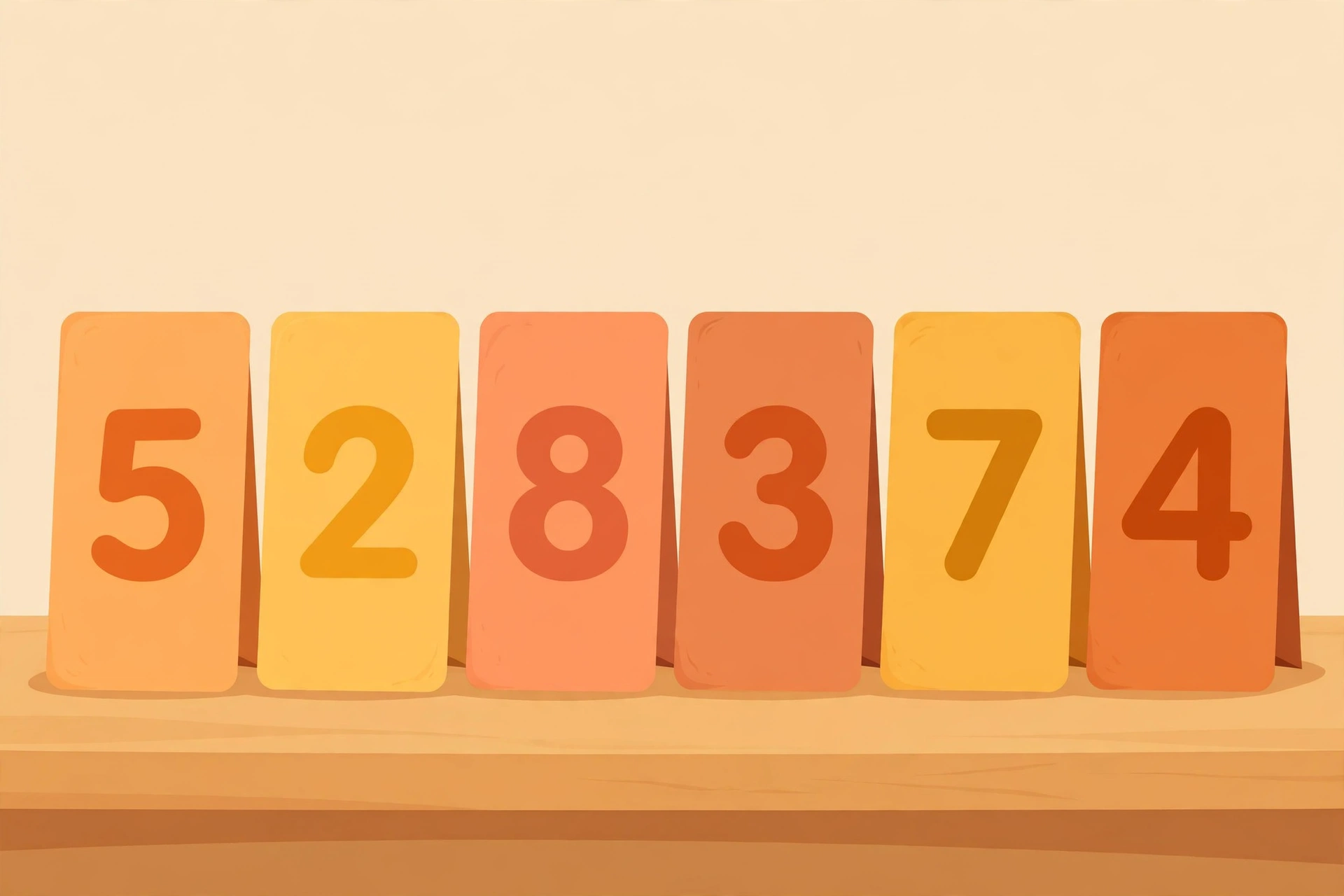
Grade 4 is the year numbers get big. Place value stretches to a million, and a child should read a number like 528,374, say what each digit is worth, compare it with a neighbor, and round it to any place.
On top of that foundation, the standard written method for adding and subtracting becomes the year’s fluency bar: accurate, reasonably quick, and steady through the hard cases like regrouping across zeros in 80,205 − 36,478.
Multiplication grows in two directions at once.
Children multiply up to four digits by one digit, and two digits by two digits, and they are expected to show how the answer is built, most often with an area model that splits 34 × 26 into four smaller products.
Division grows up too: long division arrives, with numbers up to four digits divided by a one-digit number, and remainders that must be interpreted, not just written down.
A useful home check is the fact family habit: every division answer can be checked with its matching multiplication fact, and our long division calculator shows the steps side by side when homework checking turns into an argument.
Woven through all of it are multi-step word problems, where the real skill is deciding what to do first, and a first pass at number theory: factor pairs, multiples, and sorting numbers into prime and composite.
None of this works if the grade 3 facts are not automatic, which is why a shaky 7 × 8 in September matters more than any single grade 4 topic.
Fractions and Decimals: Numbers Between Numbers
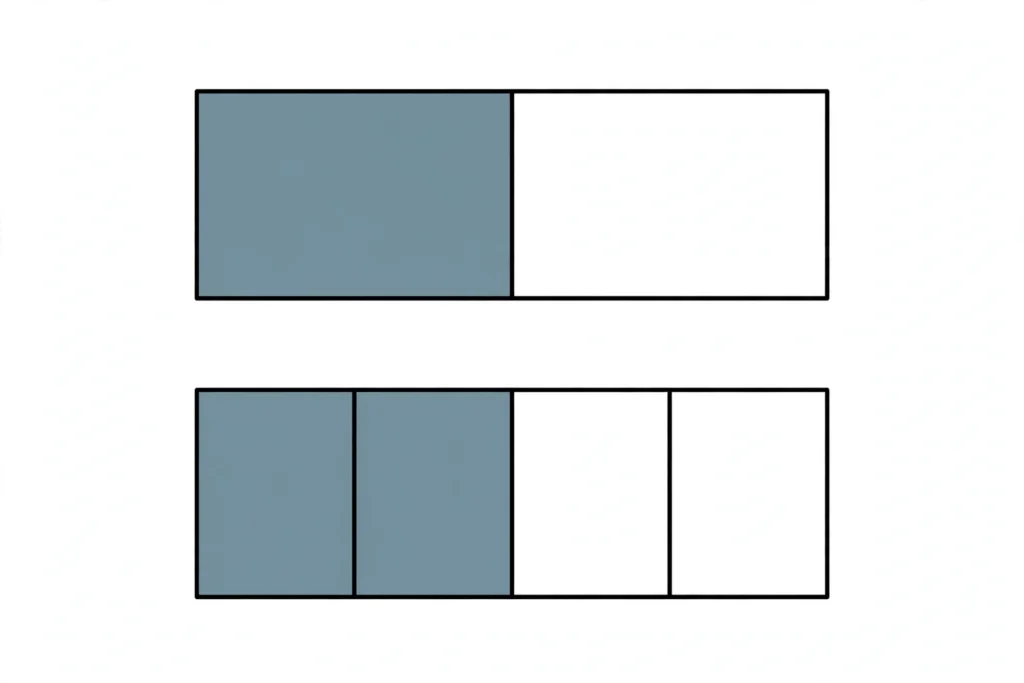
The heart of grade 4 fractions is equivalence. A child who can see why 1/2, 2/4 and 3/6 name the same amount, and who can compare 3/4 and 5/6 by using a benchmark like 1/2 or a shared denominator, owns the year’s core idea.
Comparing leans on the old less than and greater than thinking, but the numbers no longer give the answer away by size, which is exactly why this year feels harder.
Adding and subtracting stay inside like denominators, mixed numbers included, so 2 3/8 + 1 2/8 is grade 4 work and adding with different denominators is not.
Multiplying a fraction by a whole number gets its first pass (5 × 3/4 as five groups of 3/4).
Decimals then arrive as fractions wearing a different outfit: 62/100 written as 0.62, tenths and hundredths added together, and both placed on a number line where their order is visible. Money makes it concrete, since 0.62 of a dollar is just 62 cents.
Parents can check fraction and mixed-number homework with our fraction calculator instead of relearning the year’s methods at the table.
Measurement, Data and Geometry
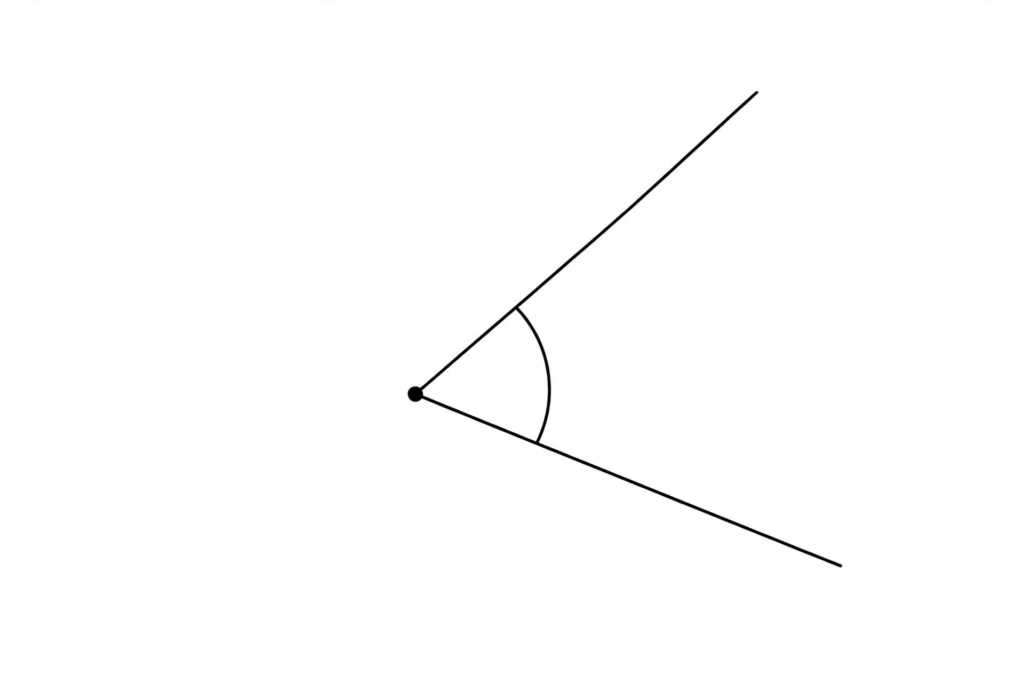
Measurement becomes conversion work: inside one system, children move between kilometers, meters and centimeters, pounds and ounces, hours, minutes and seconds, and use those conversions inside real problems about distance, mass, time and money.
Area and perimeter graduate from counting squares to formulas, area = length × width, with a genuinely new problem type mixed in: finding a missing side when the area is known.
Data work adds line plots built from measurements in halves, quarters and eighths, which quietly rehearses the fraction skills. Geometry brings the year’s most visible new tool.
Angles are defined as turns measured in degrees, children measure them in whole degrees with a protractor and sketch angles of a given size, and split-angle problems appear (a 70-degree angle made of 30 degrees and one unknown part).
Alongside angles come points, lines, rays, parallel and perpendicular lines, sorting shapes by their lines and angles, and lines of symmetry. Fumbled protractor readings in the first months are normal. Lining the tool up sensibly is the skill being built.
What If My Child Is Behind?
Check the grade 3 floor first, because most grade 4 struggles are one of three grade 3 skills wearing a bigger costume: multiplication and division facts within 100 still being counted out on fingers, fractions that only make sense as pizza slices and not as numbers on a line, or adding and subtracting within 1,000 still unreliable.
Long division built on counted-out facts will wobble no matter how well the steps are taught.
Normal wobble looks like this: second-half topics (decimals, protractor work) still shaky in spring, long division that is slow but lands, a mixed number subtraction that collapses and then works on the second try.
Patterns worth a teacher conversation are different: still counting out multiplication facts late in the year, being unable to start a multi-step problem at all, or first-half skills like place value and the written adding method still missing in the spring.
The fix is almost always smaller than parents fear.
Pick the one weak skill, practice it ten minutes a day for a few weeks with our worksheet generator set to exactly that skill, ask the teacher what they see in class, and recheck in a month.
Gaps at this age usually close with short, targeted practice, not with repeating a whole year of math.
What If My Child Is Racing Ahead?
Choose depth before distance. A child who finds grade 4 easy gets more from harder problems on grade 4 topics (multi-step problems with bigger numbers, missing-side area problems, fraction comparisons that need real reasoning) than from racing into grade 5 topics on a shaky foundation.
The two introduced topics are the safe places to stretch first: decimals beyond hundredths in money problems, and multiplying fractions by whole numbers in cooking and sharing problems. If your child seems genuinely ready for acceleration across the board, that is a teacher conversation worth having, armed with work samples rather than a feeling.
Frequently Asked Questions
Should my 4th grader know long division?
Yes, with one important limit. By the end of 4th grade, children divide numbers up to four digits by a one-digit number (936 ÷ 4, 3,745 ÷ 6) using the step-by-step written method, and they find and interpret remainders.
Dividing by two-digit numbers, like 936 ÷ 24, is grade 5 and 6 work, so if your child’s homework never asks for it, that is correct, not a gap.
Does my 4th grader need to add fractions with different denominators?
No. Grade 4 adds and subtracts fractions with the same denominator, including mixed numbers like 2 3/8 + 1 2/8. Different denominators arrive in grade 5.
What grade 4 builds instead is equivalence, knowing that 1/2 = 2/4 = 3/6 and why, which is the bridge that makes the grade 5 method make sense.
The one exception is tenths and hundredths: 3/10 + 4/100 works because 3/10 is 30/100.
What multiplication should a 4th grader know?
Two layers. The single-digit facts from grade 3 (7 × 8 and friends) should be automatic by now, because everything else stands on them.
On top of that, grade 4 multiplies up to four digits by one digit (2,416 × 3) and two digits by two digits (34 × 26), using a strategy based on place value, usually an area model, that the child can show and explain.
The fast, fully memorized written algorithm is grade 5’s job.
What is the hardest part of 4th grade math?
For most children, long division and fractions, for different reasons. Long division has many steps in a fixed order plus a remainder to make sense of, so one shaky multiplication fact can break the whole chain.
Fractions get harder because comparing 3/4 and 5/6 cannot be done by looking at the bigger numbers, and adding mixed numbers needs regrouping in a new costume. Both are hard because they are genuinely new kinds of thinking, not because a child is bad at math.
How can I tell if my 4th grader is behind in math?
Look for patterns, not single bad days, and check the grade 3 floor first: multiplication and division facts within 100 still counted out on fingers, fractions that only make sense as pizza slices and not on a number line, or adding and subtracting within 1,000 still unreliable.
In grade 4 itself, the patterns worth a teacher conversation are being unable to start a multi-step problem, and first-half skills like place value and the written adding and subtracting method still missing late in the year. Most gaps at this age close with short, targeted practice on the one weak skill.
Does my 4th grader really need to measure angles with a protractor?
Yes, as an introduction.
Grade 4 defines an angle as a turn measured in degrees, expects children to measure angles in whole degrees with a protractor and to sketch an angle of a given size, and adds simple split-angle problems (a 70-degree angle split into 30 and what?).
Precision and speed deepen later, so a child who can line up a protractor and read a measure sensibly is on track.
Do not test the whole list in one sitting. Pick two or three rows this week, check them with a real problem at the table, and let the checklist do its job over the year.
Our free math tools page keeps the helpers in one place: a step-by-step long division calculator for the year’s signature skill, a fraction calculator for checking homework, a multiplication chart, and a worksheet generator for the one skill that needs another week of practice.
Every topic clicks faster with practice. Our Resource Library has free lesson packs with slides, printable worksheets and full answer keys, ready to download and teach.
Members unlock every lesson in the library, including the full Fractions, Multiplication, Place Value, Addition & Subtraction, Time & Money and Geometry & Shapes units. See the full library


