
Parents asking what math should my 3rd grader know are asking about the pivotal year.
By the end of 3rd grade, a child knows every multiplication fact from memory, divides within 100 through the multiplication connection, adds and subtracts fluently within 1,000, rounds to the nearest 10 and 100, meets fractions as numbers on a number line, tells time to the minute, and measures area first by counting squares and then by multiplying.
Grade 3 is pivotal because multiplication, division and fractions all arrive in the same year, and everything in grades 4 and 5 stands on them. This checklist comes from the grade 3 standards used in most US states, translated into plain language a parent can check at the kitchen table.
If the year feels like a jump, that is because it is one.
Quick answer: The headline skills are multiplication facts known from memory and adding and subtracting fluently within 1,000. Multiplication facts memorized: yes, by the end of the year, all products of two one-digit numbers recalled instantly, built up from strategies (turn-arounds, splitting facts apart) during the year.
Division: yes, within 100, learned as the flip side of multiplication (56 ÷ 8 means “8 times what is 56”). Long division is grade 4, not this year.
Fractions start this year, as numbers on a number line, with denominators 2, 3, 4, 6 and 8, and no fraction arithmetic yet. Also new: area measured in unit squares, time to the exact minute, and scaled graphs where one square can stand for 5.
The 3rd Grade Math Checklist
Read the third column carefully, because it is the difference between a worry and a work in progress. Expected by June means a child should use the skill confidently by the end of the year.
Introduced this year means the topic gets its first solid pass now and deepens in grade 4 or 5, so a child who is still shaky on it in June is usually still on track.
| Skill area | What it looks like | By end of year |
|---|---|---|
| Multiplication facts | Knows 7 × 8 = 56 on sight, and can build a fact they forget: 8 × 7 as 8 × 5 + 8 × 2 = 40 + 16 | Expected by June (all products of two one-digit numbers, from memory, the fluency bar of the year) |
| Division within 100 | Solves 56 ÷ 8 = 7 by asking “8 times what is 56”, and can share 24 counters into 6 equal groups of 4 | Expected by June. Learned through multiplication, not a written method |
| Multiplying with tens | Works out 9 × 80 = 720 and 5 × 60 = 300 by thinking in tens (9 × 8 tens) | Expected by June |
| Adding and subtracting within 1,000 | Solves 458 + 376 and 652 − 278 accurately, and can show the regrouping or a number-line method behind the answer | Expected by June (strategy-based fluency. The standard written method is grade 4) |
| Rounding | Rounds 347 to 350 (nearest 10) and 300 (nearest 100), and uses rounding to check if a word-problem answer makes sense | Expected by June |
| Two-step word problems | Solves “4 packs of 6 pencils, 5 given away” in two steps (4 × 6 = 24, 24 − 5 = 19) and writes an equation with a letter for the unknown | Expected by June |
| Fractions as numbers | Explains that 3/4 is three parts of size 1/4, and that the parts must be equal. Denominators are only 2, 3, 4, 6 and 8 this year | Expected by June |
| Fractions on the number line | Places 1/4, 2/4 and 3/4 on a line from 0 to 1, and knows 4/4 sits exactly on the 1 | Introduced this year (the foundation grade 4 and 5 fraction work stands on) |
| Fraction equivalence and comparing | Sees why 1/2 = 2/4 and 4/6 = 2/3, knows 3 = 3/1, and explains why 1/8 is smaller than 1/4 (same whole, more parts) | Introduced this year (simple cases. Comparing is only with the same numerator or denominator) |
| Time and elapsed time | Reads 4:37 on an analog clock and works out that 3:45 to 4:20 is 35 minutes, often on a number line | Telling time expected by June. Elapsed time problems introduced this year |
| Measuring length, mass and volume | Measures to the nearest quarter inch, estimates whether a bag of rice is closer to 1 gram, 1 kilogram or 10 kilograms, and solves one-step problems in liters | Expected by June |
| Scaled graphs and line plots | Reads a bar graph where each square stands for 5 pets, answers “how many more” questions from it, and plots classmates’ pencil lengths in halves and quarters | Expected by June |
| Area | Covers a 4 × 6 rectangle with 24 unit squares, then finds the same answer by multiplying 4 × 6, and splits an L-shaped room into two rectangles and adds | Expected by June (concept and method. The formula treatment is grade 4) |
| Perimeter and shapes | Adds the sides of a pentagon (3 + 4 + 3 + 4 + 5 = 19), finds a missing side from a known perimeter, and knows a square is also a rectangle, a rhombus and a quadrilateral | Expected by June |
Numbers and Operations: The Foundation Year
Multiplication arrives as a meaning before it becomes a memory task. A child first meets it as equal groups and arrays: 4 × 6 is four rows of six counters, and the picture is what the fact means.
Then the facts get built with strategies that make them stick: turn a fact around (6 × 4 is 4 × 6), or split a hard one apart (8 × 7 is 8 × 5 plus 8 × 2, which is 40 + 16 = 56).
The bar for June is plain: every product of two one-digit numbers known from memory. Our multiplication chart is the honest practice partner while the facts are still being built: check the chart, do not guess.
Division is taught as multiplication’s flip side, inside the same fact family.
A child solves 56 ÷ 8 by asking “8 times what makes 56”, shares 24 counters into equal groups, and meets both meanings of division: splitting 24 cookies among 6 friends, and making groups of 6 out of 24 cookies.
There is no written division method this year, and that is correct, not a gap.
The rest of the number work builds on grade 2. Place value to 1,000 carries adding and subtracting within 1,000 fluently, with regrouping shown through strategies, drawings or a number line. The fast standard written method is grade 4’s bar, so strategy-based work in grade 3 is not behind, it is the plan.
Children also multiply with tens (9 × 80 = 720, thought of as 9 × 8 tens), round 347 to 350 and to 300, and use rounding to sanity-check answers. Running through all of it are two-step word problems, where deciding what to do first is the real skill.
Fractions: Numbers, Not Just Pizza
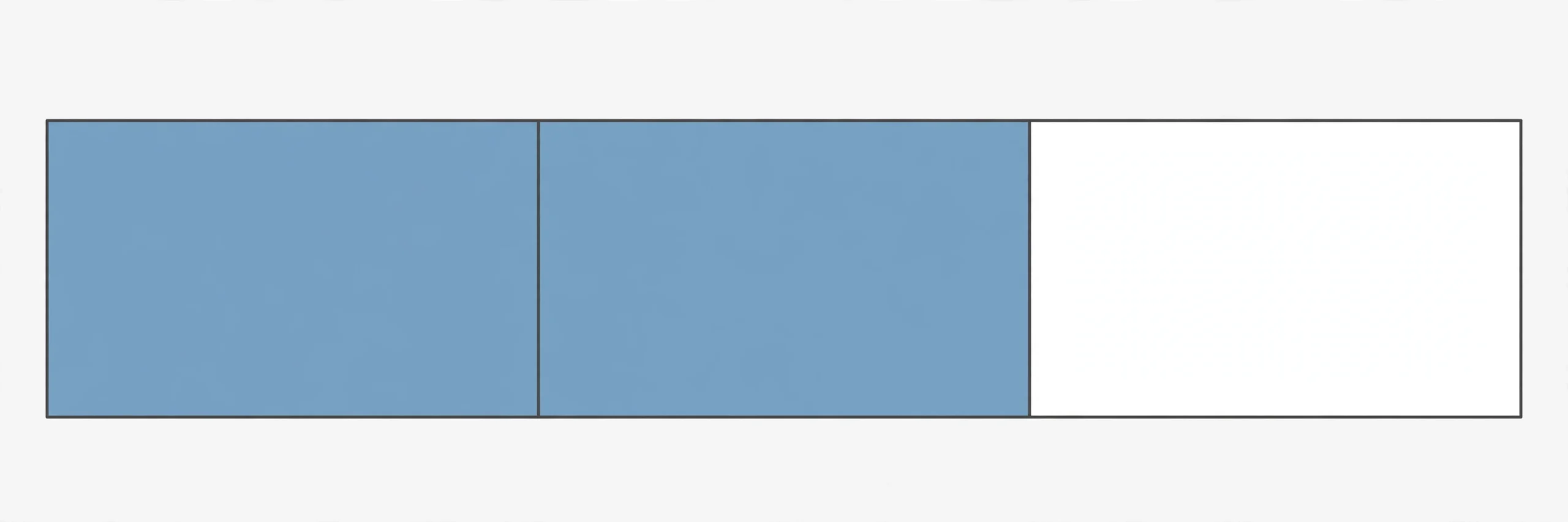
Grade 3 is where fractions begin in earnest, and the standards introduce them as numbers, not just parts of a pizza. A unit fraction like 1/4 is one part of a whole split into 4 equal parts, 3/4 is three of those parts, and both live as points on a number line between 0 and 1.
That number line is the year’s central picture: the whole from 0 to 1 gets split into equal parts, fractions sit at their points, and 4/4 lands exactly on the 1. Whole numbers can wear fraction clothes too, since 3 is also 3/1.
Equivalence and comparing arrive in simple cases.
Children see why 1/2 = 2/4 and 4/6 = 2/3, and they compare fractions that share a numerator or a denominator, including the idea that feels backwards at first: 1/8 is smaller than 1/4, because the same whole cut into more parts makes smaller parts.
The denominators stay at 2, 3, 4, 6 and 8 all year. Just as important is the not-this-year list: no adding or subtracting fractions (that is grade 4, with like denominators), no comparing with different numerators and denominators, and no decimals.
A child whose homework never asks for those is on the standard path.
Measurement, Data and Geometry
Time sharpens to the exact minute on an analog clock, and the first elapsed-time problems appear: from 3:45 to 4:20 is 35 minutes, usually worked out on a number line.
Measuring adds quarter inches, grams and kilograms, and liters, with one-step problems in each. Data work grows up too: scaled picture and bar graphs, where one square can stand for 5 pets, and line plots of measurements in halves and quarters.
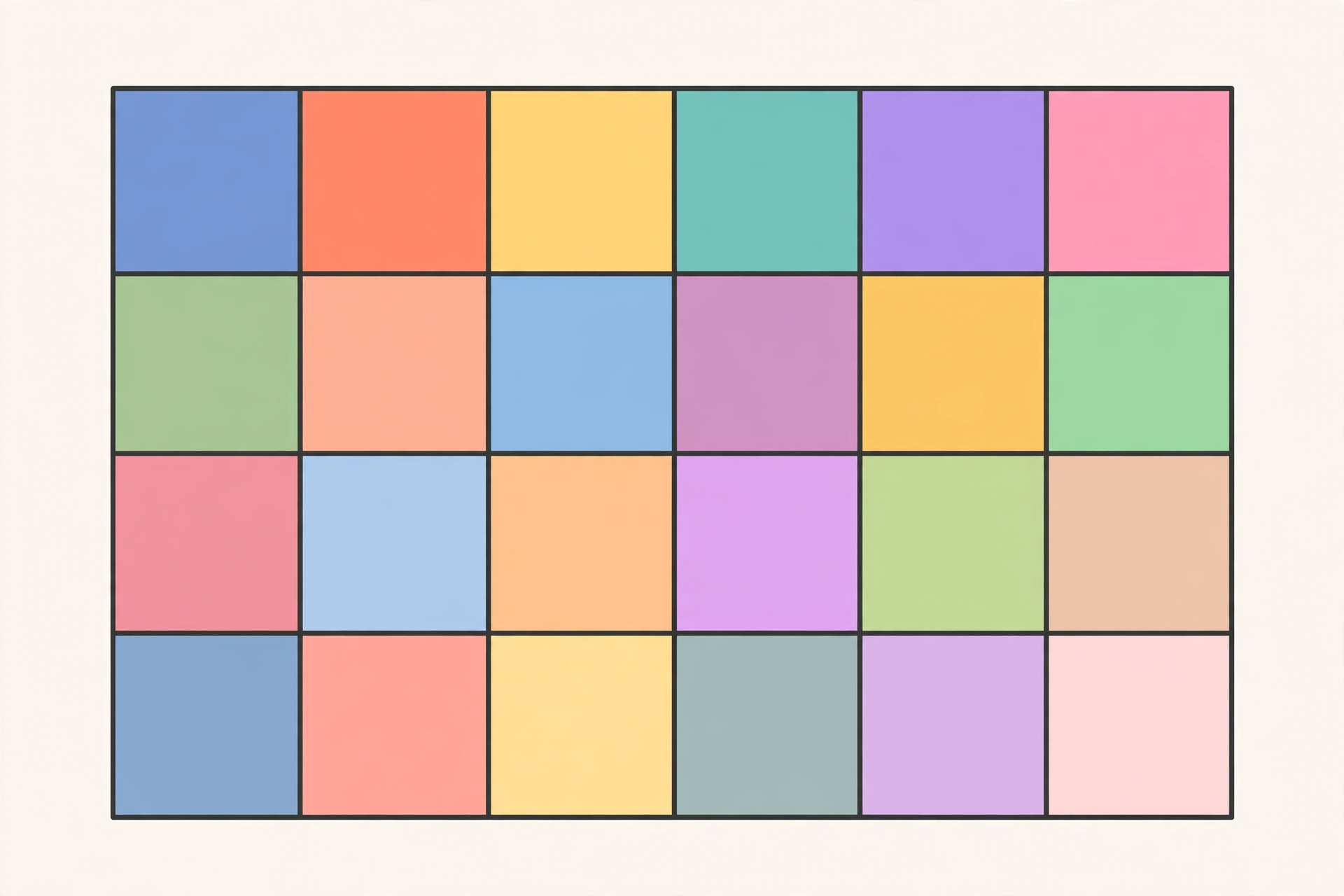
Area is the section’s star, and it is taught as multiplication you can see. A child covers a rectangle with unit squares, counts 24, and then notices that multiplying the side lengths, 4 × 6, gives the same 24. That moment is the area model being born.
L-shaped rooms get split into two rectangles and added. Perimeter is the fence around the area: add the side lengths, find a missing side when the total is known, and compare rectangles with the same perimeter and different areas.
Geometry rounds it out with shape families: a square is a rectangle, a rhombus and a quadrilateral all at once, and shapes get split into equal parts named as unit fractions, which quietly rehearses the fraction work.
What If My Child Is Behind?
Check the grade 2 floor first, because most grade 3 struggles are a grade 2 skill wearing a bigger costume. The floor is specific: adding and subtracting within 100 fluently (47 + 35 and 82 − 47 without counting on fingers), single-digit sums known from memory (8 + 7 = 15 recalled, not derived), place value to 1,000 (building 347 as 300 + 40 + 7 and comparing it with 374), and adding and subtracting within 1,000 with blocks, drawings or a number line. Facts cannot be memorized on top of shaky adding within 100, and fractions cannot land on top of shaky place value.
Normal wobble looks like this: facts still being built with strategies in the middle of the year, the 7s and 8s learned last, fraction number lines shaky in the first term.
Patterns worth a teacher conversation are different: still counting out single-digit sums, no equal-groups picture of multiplication by spring (facts memorized as songs but not understood), and being unable to place 1/2 on a number line late in the year.
The fix is almost always smaller than parents fear. Pick the one weak skill, practice it ten minutes a day for a few weeks with our worksheet generator set to exactly that skill, ask the teacher what they see in class, and recheck in a month.
One honest note for this grade in particular: closing a grade 3 gap early matters more than at most grades, because grade 4 assumes the facts and the fraction foundations from the first week.
What If My Child Is Racing Ahead?
Choose depth before distance. A child who finds grade 3 easy gets more from harder problems on grade 3 topics (two-step problems with bigger numbers, rectangles with the same perimeter and different areas, fraction comparisons that need real reasoning, areas of L-shapes) than from racing ahead.
The introduced topics are the safe places to stretch first: elapsed time across the hour, equivalent fractions with bigger denominators as pictures, and multiplying by tens stretched to hundreds (9 × 800 as an idea, not a requirement). One warning worth hearing: long division is the classic false summit here.
A child who can perform its steps without the fact fluency underneath has built on sand. If your child seems genuinely ready for acceleration across the board, that is a teacher conversation worth having, armed with work samples rather than a feeling.
Frequently Asked Questions
Should my 3rd grader have multiplication facts memorized, and by when?
Yes, by the end of 3rd grade. The standard is plain: by the end of the year, children know from memory all products of two one-digit numbers, so 7 × 8 = 56 comes back instantly, not after counting.
But memorized does not mean drilled cold from September. Children build the facts with strategies first (turning 6 × 4 around, splitting 8 × 7 into 8 × 5 plus 8 × 2), and the strategies are what make the facts stick.
A child using strategies in the fall is on track. A child still counting out most facts in the spring is the one who needs a plan.
Does my child need to know division in 3rd grade?
Yes, but probably not the division you are picturing. Grade 3 division stays within 100 and is learned as the flip side of multiplication: 56 ÷ 8 is solved by asking “8 times what makes 56”.
Children also meet both meanings of division (sharing 24 cookies among 6 friends, and making groups of 6 from 24 cookies) and find missing numbers in division equations. There is no long division and no written division method this year.
That arrives in grade 4 (our long division calculator shows what is coming), and it arrives on top of these facts, which is why this year’s version matters.
When do fractions start?
This year. Grade 3 is where fractions begin in earnest, and the standards introduce them as numbers, not just parts of a pizza: 1/4 is one part of a whole split into 4 equal parts, 3/4 is three of those parts, and both live as points on a number line between 0 and 1.
Grade 3 denominators are only 2, 3, 4, 6 and 8. Children recognize simple equivalents (1/2 = 2/4) and compare fractions that share a numerator or a denominator. Adding and subtracting fractions is not grade 3 work: like denominators come in grade 4, different denominators in grade 5.
What is the hardest part of 3rd grade math?
For most children, the multiplication facts and fractions, and they are hard for the same reason: both are new kinds of thinking, not just more of last year’s. The facts are a volume problem, a hundred products to make automatic while also learning what multiplication means.
Fractions are a meaning problem: for the first time, a number can sit between two whole numbers, and a bigger denominator means smaller pieces, which feels backwards until the number line makes it visible. Both are hard because grade 3 is the pivotal year, not because a child is bad at math.
How can I tell if my 3rd grader is behind in math?
Look for patterns, not single bad days, and check the grade 2 floor first: adding and subtracting within 100 still done by counting on, single-digit sums not yet automatic, or place value to 1,000 shaky. Those three quietly block everything grade 3 tries to build.
In grade 3 itself, the patterns worth a teacher conversation are: no picture of multiplication as equal groups by spring (facts memorized as songs but not understood), still counting out most multiplication facts late in the year, and being unable to place 1/2 or 1/4 on a number line.
Most gaps at this age close with short, targeted practice on the one weak skill, ten minutes a day.
Does my 3rd grader need to tell time on an analog clock?
Yes. Grade 3 expects children to tell and write time to the nearest minute, and analog clocks are where that is taught and tested. The jump from grade 2 is the single minute instead of the nearest five.
Grade 3 also adds the first elapsed-time problems in minutes (from 3:45 to 4:20 is 35 minutes), usually worked out on a number line. A home with no analog clock is worth fixing cheaply: five minutes of “what time is it really” at breakfast is exactly the practice the standard imagines.
Do not test the whole list in one sitting. Pick two or three rows this week, check them with a real problem at the table, and let the checklist do its job over the year.
Our free math tools page keeps the helpers in one place: the multiplication chart this year’s facts are built on, a fraction calculator for checking fraction arguments, and a worksheet generator for the one skill that needs another week of practice.
Every topic clicks faster with practice. Our Resource Library has free lesson packs with slides, printable worksheets and full answer keys, ready to download and teach.
Members unlock every lesson in the library, including the full Fractions, Multiplication, Place Value, Addition & Subtraction, Time & Money and Geometry & Shapes units. See the full library


